The short answer. Two separate systems can stop a lawfully owned object at a border. The first, CITES, looks at what the object is made of: tortoiseshell, most whale products, Brazilian rosewood and most elephant ivory are Appendix I materials, so moving them internationally needs permits or a pre-Convention certificate — age alone is not enough. The second looks at cultural heritage: states such as the UK can defer an export licence for an object of national importance. National laws sit on top of both; the UK Ivory Act, for example, bans dealing in ivory items outside narrow exemptions. Check the material, the date of manufacture and the paperwork before you buy, not when you ship.
There is a category of possession that unsettles collectors more than any question of value: the object that is entirely, lawfully yours, and that you may not be able to take home.
It is not a rare predicament. A late-Victorian dressing set with tortoiseshell backs. A Regency cabinet with ivory stringing. A guitar with a Brazilian rosewood back, bought new in 1968. A cased travelling clock, a fan, a piano, a pair of opera glasses. None of these was illicit when it was made. None is illicit to own now. All of them can be stopped at a frontier, and in some cases seized.
Two entirely separate regimes govern this, and conflating them is where most collectors come unstuck. The first cares only about what the object is made of. The second cares only about whose heritage a government has decided it represents. An object can fall foul of either, or both, and satisfying one grants nothing under the other.
The first regime: what it is made of
The Convention on International Trade in Endangered Species governs the movement of material derived from protected species. Its reach is easy to underestimate: in the edition of the appendices valid from February 2023, they ran to more than 40,900 species — roughly 6,610 animal and 34,310 plant.
The structure that matters is the division into appendices. Appendix I covers species threatened with extinction, where commercial international trade is prohibited and any movement requires permits at both ends. Appendix II covers species that are not necessarily threatened now but may become so without control; trade is permitted with an export permit. Appendix III covers species a member state has asked others to help it protect.
Before the list below, the caveat that governs it. CITES listings are not fixed. They are amended at each Conference of the Parties, and amendments normally enter into force ninety days after adoption. The listings set out here are those in the edition of the appendices valid from 23 February 2023 — the set adopted at CoP19 in Panama. CoP20 was held in December 2025, and we were unable to read the resulting appendices directly, because the CITES secretariat's own site blocks automated access. Some of what follows may therefore have been amended. Treat the table as the position under a dated edition, not as a live register, and check the current appendices before acting on any line of it. That is not a hedge; it is the only honest way to publish a listing table.
The materials a collector actually encounters sit uncomfortably high in that hierarchy.
| Material, as it appears in collectibles | Status in the appendices valid from 23 Feb 2023 |
|---|---|
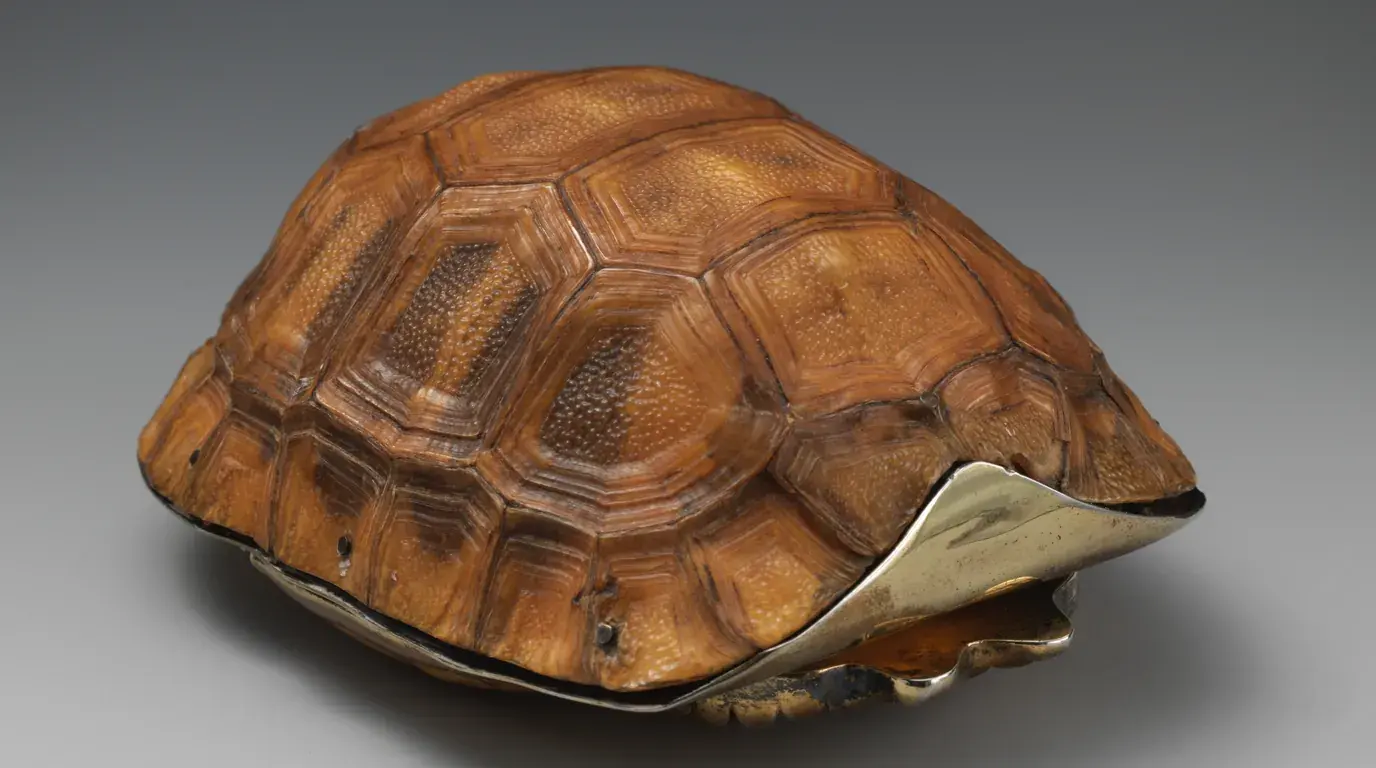
| Tortoiseshell — watch cases, spectacle frames, combs, boxes, fans | The whole sea-turtle family Cheloniidae is Appendix I |
| Whale products — baleen in boxes and corsetry, sperm whale ivory in scrimshaw | Nearly all whales, the sperm whale included, are Appendix I |
| Elephant ivory — inlay, piano keys, cane and cutlery handles, clock dials | Asian elephant Appendix I outright; African elephant Appendix I except the populations of Botswana, Namibia, South Africa and Zimbabwe |
| Brazilian rosewood (Dalbergia nigra) — furniture, guitar backs and sides | Appendix I, with no exemptions |
| Other rosewoods (the wider Dalbergia genus) | Appendix II under Annotation #15, which itself exempts finished musical instruments, finished parts and accessories, and up to 10 kg of wood per shipment |
| Crocodilian skins — straps, cases, luggage | Mixed listings, several governed by quota |
Appendix I is the line that changes a collector's life. It does not mean the object cannot be owned. It means commercial international trade in it is prohibited, and that moving it across a border is a permitted exception rather than a default.
The listings move, and December 2025 proved it
If you want a demonstration that this is a live register rather than a settled one, take the wood that violin bows are made from. Following CoP20, the European Commission records that Paubrasilia echinata — Brazil wood, or pernambuco, the standard material of the fine bow since the eighteenth century — "remains listed under Appendix II of CITES with a revised Annotation #10", and directs traders to updated guidance on "trade in Brazil wood timber and bows", noting that further implementation work on traceability and stockpile registration is still in progress.
Read that carefully, because it is the shape of the whole subject. The species did not move between appendices. The annotation changed — the small print that determines which forms of the material, in which quantities, are caught. A collector who checked the appendix and stopped there would have concluded nothing had changed. The thing that governs whether a bow can cross a frontier is the annotation, and the annotation was rewritten while the appendix stayed still.
The two exemptions almost everybody misreads
There are two escape routes people reach for, and both are narrower than the folklore.
The first is the pre-Convention exemption, for specimens acquired before the species came under CITES control. It is real, and it is set out in the parties' own resolution on the subject. It is also not self-executing: it requires a certificate. Age alone is not a passport. An 1890 tortoiseshell box does not travel because it is manifestly Victorian; it travels because a management authority has issued a document saying so, and you are carrying that document.
The second is the personal and household effects exemption, widely assumed to cover anything in your own luggage. It is the opposite of what most people believe, and the parties wrote the exclusion down in terms: "the exemption in Article VII, paragraph 3, of the Convention does not apply to specimens of Appendix-I species that are souvenirs being imported by a person returning to his State of usual residence."
That single sentence disposes of the most common assumption in the field. The tortoiseshell comb bought in a market abroad and carried home in a suitcase is not covered by the personal-effects exemption. It is the precise case the resolution excludes.
The pattern here is one this journal returns to constantly. The paperwork is not administration attached to the object. Under this regime, the paperwork is the object's right to exist in commerce — the same principle set out in our guide to the documents that matter when buying with provenance and in the broader provenance research guide.
A second, stricter layer: national law above the treaty
CITES is a floor, not a ceiling. Individual states legislate above it, and where they do, "CITES-compliant" stops being an answer.
The United Kingdom's Ivory Act 2018 is the clearest example, and its dates are worth having precisely, because the Act's own name misleads. Parliament passed it in 2018. The substantive prohibition did not commence until 6 June 2022, and the commencement regulations say so in terms — the relevant provisions come into force "for all remaining purposes, on 6th June 2022". Then, on 28 January 2025, the definition of ivory was widened beyond the elephant to cover hippopotamus, narwhal, killer whale and sperm whale.
Walrus was not included, and that omission catches people out precisely because it looks arbitrary. Walrus ivory is not exempt from control; it sits under a separate seal-products regime instead. The lesson generalises: an object is not cleared by establishing that one statute does not reach it.
The Act does not ban ownership. It bans dealing — selling, hiring, buying or keeping for sale — unless the item is registered or certified under one of a small number of exemptions, and those exemptions are defined with a precision that rewards reading:
- A musical instrument made before 1975 with less than 20% ivory by volume.
- An item made before 3 March 1947 with less than 10% ivory by volume, where all the ivory is integral to the object.
- A portrait miniature made before 1918 with a total surface area no greater than 320 square centimetres.
- An item being sold or hired to a qualifying museum.
Above those sits a separate route for the exceptional object: an exemption certificate for an item made before 1918 that is of outstandingly high artistic, cultural or historic value. Assessment takes approximately three months, and the item may not be sold or hired until the certificate is issued.
The numbers around the process are as instructive as the thresholds. Registration costs £20. An exemption certificate application costs £250. Dealing without an exemption carries a maximum fine of £250,000 or imprisonment.
Read those four exemptions again with a real collection in mind. A pre-1947 tea caddy with ivory escutcheons is likely fine. A 1955 cigarette box with an ivory lid is not, because it is post-1947 and not a musical instrument. The date and the percentage are doing all the work, and neither is negotiable.
The second regime: whose heritage the object is
The other restriction has nothing to do with materials. It applies when a state decides an object matters enough to its own culture that it should not leave.
In the United Kingdom, exporting an object of cultural interest requires an export licence, administered by Arts Council England. Where an object is judged to be of outstanding national importance, a decision on the licence is deferred to give a domestic institution or buyer the opportunity to match the price. It is not expropriation. It is a pause, and a first refusal.
What makes this regime unusually knowable is that the outcomes are published. The Reviewing Committee's sixty-eighth annual report, covering 2022–23 and produced by Arts Council England for the Department for Digital, Culture, Media and Sport, records the year in full:
- 18 objects referred to the Committee
- 16 considered in detail
- 13 met at least one criterion and had their licence decision deferred, aggregate value £15,593,430
- 7 saved for the nation, at £3,750,390
- 4 not saved, licensed and departed, at £9,557,040
- 2 still outstanding at the close of the year, at £2,286,000
The counts reconcile: seven plus four plus two is thirteen. It is the money that does not.
Sit with those two lines, because the two ways of reading them disagree completely. By number, the system works: seven of thirteen stayed, fifty-four per cent. By value, it does the opposite: the seven that stayed were worth £3,750,390, twenty-four per cent of the total, while the four that left were worth £9,557,040 — sixty-one per cent. Four objects carried more than two and a half times the value of the seven that were saved.
The mechanism explains the gap. A state can defer an export licence; it cannot conjure the money to match a price. The deferral gives a domestic institution the chance to buy, and the more important — which is to say the more expensive — the object, the less likely that chance is to be taken. The system is at its weakest precisely where it matters most, and it publishes the evidence itself.
Thirteen objects in a year is also a small number, which is the point. This regime is not a general restriction on exporting art. It is a narrow, occasional, and very consequential intervention on the objects at the very top.
The European Union added a mirror-image control from the import side. Regulation (EU) 2019/880 prohibited the import of illegally exported cultural goods under Article 3(1) from 28 December 2020, with a fuller licensing and importer-statement regime — covering archaeological and dismembered-monument material over 250 years old at any value, and other cultural goods over 200 years old worth €18,000 or more — applying from the date the electronic system became operational, or 28 June 2025 at the latest. The direction of travel across both regimes is the same: away from the object being its own credential, and towards a documented chain that begins before you acquire it. That is the same logic that governs restitution practice, discussed in our piece on the Washington Principles and 1933–1945 provenance.
What we could not establish
Several things resisted verification, and naming them is more useful than papering over them.
The most important gap is stated above but bears repeating. The CITES secretariat's own site blocked automated access throughout. The listings in the table come from the edition valid from 23 February 2023, and we could not read whatever emerged from CoP20 in December 2025. We know CoP20 happened and that it revised at least one annotation of direct relevance to collectors; we cannot confirm what else it changed. Any line of that table could have moved. For the same reason we give no first-listing years and cite no decision numbers — a decision we have not read is a decision we should not print.
Beyond that: no official United States or European Union ivory dates, because the issuing agencies blocked every attempt, so neither appears. No Italian notifica, the declaration of cultural interest that restricts export of designated objects — an obvious example, omitted because we could not read the statute. And no Reviewing Committee report later than 2022–23; if one exists its numbers should replace these, and the saved-versus-exported split is the figure worth re-running first.
We also looked for a documented case of a finished collectible seized at a border, and did not find one we could stand behind. The seizures that are well documented are of raw material at scale — 29,434 Madagascar rosewood logs impounded in Singapore in March 2014 being the clearest example. That absence is itself informative: the risk to a collector is less often dramatic confiscation than a shipment that simply cannot proceed, quietly, at a broker's desk.
The practical consequence
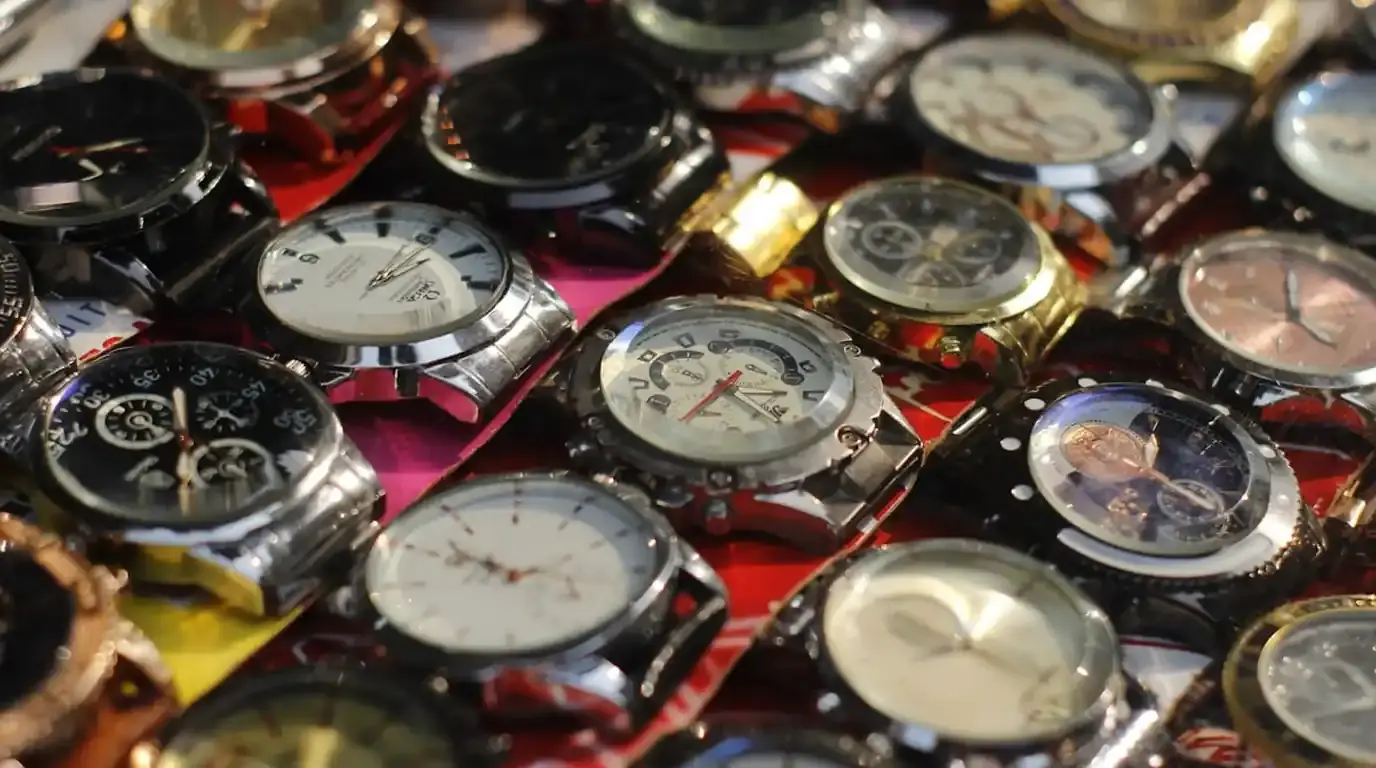
For anyone assembling a collection intended to outlive them, the lesson is narrow and unglamorous. Before asking what an object is worth, ask what it is made of and when it was made. Those two facts determine whether it can be sold across a border at all, and an object that cannot travel has a materially smaller market than one that can — a consideration belonging alongside the survival questions in what art survives a century and whether luxury watches last a hundred years.
Then treat certificates as part of the object. A pre-Convention certificate, an ivory registration, an export licence: these are not receipts. They are what makes the object saleable, and they deserve to be catalogued and insured as seriously as the piece — the premise behind both our collection insurance guide and the art insurance guide, and the reason for reading a lot properly before bidding, as set out in how to read an auction catalogue.
And ask before the sale rather than after. A vendor who cannot say what the inlay is, or when the case was made, is telling you something about the paperwork. In this field, as in watch collecting, the object that arrives with its documentation is not merely better recorded. It is worth more, because it can go further.
More in Provenance Files.
Frequently asked questions
Can I take an antique made with ivory or tortoiseshell abroad?
Possibly, but not on age alone. Both materials come from species listed in CITES Appendix I, so international movement is an exception that needs the right documents — typically a pre-Convention certificate issued by a management authority — and the rules of both the exporting and importing country apply. Check with the management authority in each jurisdiction before shipping or travelling.
Does the personal-effects exemption cover items in my luggage?
Not for Appendix I souvenirs. The CITES parties' own resolution states that the personal and household effects exemption "does not apply to specimens of Appendix-I species that are souvenirs being imported by a person returning to his State of usual residence".
Can I sell an antique containing ivory in the UK?
Only if the item is registered or certified under one of the Ivory Act's exemptions — for example, an item made before 3 March 1947 with less than 10% ivory by volume, or a musical instrument made before 1975 with less than 20%. Registration costs £20, an exemption certificate application £250, and dealing without an exemption carries a maximum fine of £250,000 or imprisonment (figures as published and read on 26 July 2026).
Is Brazilian rosewood allowed on a vintage guitar?
Brazilian rosewood (Dalbergia nigra) is in CITES Appendix I with no exemptions in the edition of the appendices valid from 23 February 2023, so taking such an instrument across a border needs documentation. Other rosewoods fall under Appendix II with an annotation that exempts finished musical instruments. Check the current appendices, since listings change at each Conference of the Parties.
This article is general information about wildlife-trade and cultural-property regimes, not legal advice. UK statutory dates and figures are as published and were read on 26 July 2026. The CITES listings are those in the edition of the appendices valid from 23 February 2023; CoP20 was held in December 2025 and we were unable to read the resulting appendices, so individual listings may since have been amended. National implementing law differs by country and thresholds change. Anyone proposing to move a relevant object across a border should confirm the current position with the competent management authority in both jurisdictions before shipping.