The short answer. A well-made oil painting, an egg tempera panel, a bronze or a carved stone can last for centuries — but only because someone keeps looking after it. Gelatin silver photographs and well-made pigment prints on cotton rag paper also have long life expectancies. Chromogenic (C-type) colour photographs, work made with fugitive pigments, and mixed media that combines incompatible materials can fade or come apart within decades. The medium sets the ceiling; light, relative humidity and maintenance decide whether a piece reaches it. The Canadian Conservation Institute's own figures show how fast: a highly light-sensitive watercolour displayed at 50 lux can show a just-noticeable fade in as little as a year and a half.
This piece belongs to The 100-Year Object, our series on what is still worth owning in a century.
Survival is maintenance, not magic
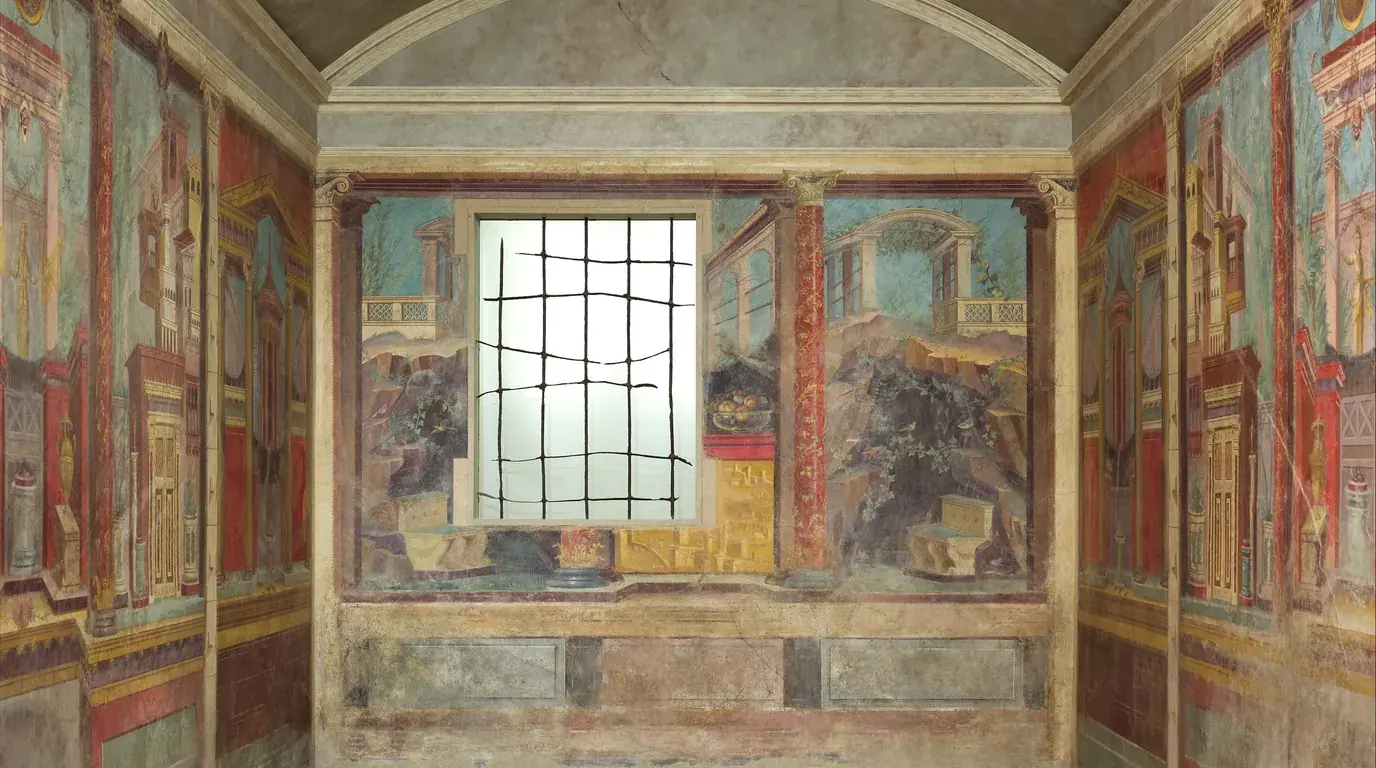
The five-hundred-year-old oil paintings in a museum have not simply survived. They have been kept at stable temperature and humidity, protected from sunlight, re-stretched, re-varnished and cleaned, for generations. Mark Golden, of Golden Artist Colors, has made the point that most oil paintings in museum collections have cracked; visitors do not see it because the cracking is managed by conservators.
That sets the realistic baseline. Art that reaches a hundred years has almost always been actively looked after for most of that time. Works that someone values get that care; works nobody currently values go into a basement until the next move damages them. The first filter for survival is whether anyone will bother.
How long each medium lasts: the comparison
| Medium | Long-term prospects in normal indoor care | Main risk | What to ask before buying |
|---|---|---|---|
| Oil on properly prepared canvas or panel | Centuries, with conservation | Cracking, yellowing varnish; panels move with humidity | Support, ground, varnish; condition report |
| Egg tempera on panel | Among the longest-surviving paintings we have | Panel movement | Panel condition and past treatment |
| Acrylic with lightfast pigments | Promising, but only about 70 years of track record | Soft surface that holds dirt | Paint brand and pigments |
| Bronze | Effectively indefinite indoors | Corrosion if damp | Foundry, edition, patina history |
| Carved stone | Effectively indefinite indoors | Weathering outdoors | Indoor or outdoor history |
| Watercolour on cotton rag paper | Centuries if lightfast and kept dim | Light: fugitive pigments fade fast | Pigments, paper fibre content, display history |
| Gelatin silver print (black and white) | Long-lived in proper conditions | Poor processing, pollutants | Print date and processing |
| Pigment print on cotton rag | Among the most stable colour processes in production | Ink-and-paper combination matters | Exact inks and paper; any published permanence rating |
| Chromogenic (C-type) print | Shorter: dyes shift and fade | Light and dark fading of dyes | Print date and process |
| Mixed media and installation | The lowest, by a wide margin | Incompatible materials; obsolete technology | Materials list; artist's instructions for replacement |
The ranking is about materials, not reputation. A well-made oil on linen from 2020 will probably outlast a poorly made one from 1620; a pigment print on archival paper from 1995 will probably outlast a chromogenic print from the same year.
Worked example: how fast light fades a work on paper
The Canadian Conservation Institute (CCI) gives the light dose — in million lux hours (Mlx h) — at which colours on the ISO Blue Wool scale show a "just noticeable fade". It assumes 8 hours a day and 3,000 hours a year, and recommends the traditional limit of 50 lux for works on paper, watercolours and photographs, 150 lux for oil and acrylic surfaces, and 300 lux for stone and metal.
Take a watercolour containing a colour of Blue Wool #3 sensitivity — in CCI's "high" category:
| Display condition | Dose per year | Dose for a just-noticeable fade (CCI) | Years until it shows |
|---|---|---|---|
| 50 lux, UV present | 50 × 3,000 = 0.15 Mlx h | 1.5 Mlx h | 1.5 ÷ 0.15 = 10 years |
| 50 lux, UV removed | 0.15 Mlx h | 3 Mlx h | 3 ÷ 0.15 = 20 years |
| 150 lux (an "oil painting" level), UV present | 150 × 3,000 = 0.45 Mlx h | 1.5 Mlx h | 1.5 ÷ 0.45 = 3.3 years |
| 150 lux, UV removed | 0.45 Mlx h | 3 Mlx h | 3 ÷ 0.45 = 6.7 years |
For the most sensitive colours (Blue Wool #1, 0.22 Mlx h with UV present), the same 50 lux produces a just-noticeable fade in about a year and a half — CCI's own range for high-sensitivity colours at 50 lux is 1.5 to 20 years. Two practical conclusions follow. UV-filtering glazing doubles the time in this example, and dimming from 150 to 50 lux triples it. Neither stops fading; only darkness does, which is why museums rotate works on paper rather than hanging them permanently. CCI's traditional UV rule is to keep UV below 75 µW/lm.
Relative humidity: why swings matter more than the number
CCI names four kinds of incorrect relative humidity: damp (over 75%, which brings mould and corrosion), levels above or below a critical value for a particular material, any moisture at all for materials that hydrolyse (acidic paper, magnetic tape), and fluctuation. For paintings, CCI notes that fluctuation can crack, delaminate or flake paint, that panel paintings are more vulnerable than canvas, and that "fluctuation to lower RH is much higher risk to paintings than fluctuation to higher RH". Its museum classes use 50% RH as a typical setpoint with temperature between 15°C and 25°C; even very sensitive objects see little damage from ±5% swings, while ±40% can cause severe damage.
In a home, that translates into three habits: no paintings above radiators or fireplaces, no works on paper on outside walls or in bathrooms, and no sudden drying out when the heating comes on in winter. How to frame, hang and handle each medium is in caring for, framing and conserving fine art at home.
Photography: the most under-discussed risk
A good share of colour photography sold in the 1990s and 2000s is materially fragile in a way buyers were rarely told. Two questions settle most of it: what kind of print is it, and on what paper?
- Gelatin silver — the traditional black-and-white process; long-lived when properly processed and stored.
- Pigment print (archival inkjet, sometimes sold as giclée) — the current best practice for colour work intended to last. Ask for the exact ink set and paper, and for any permanence rating the printer or manufacturer publishes for that combination.
- Chromogenic (C-type) — colour is formed by dyes, which are less stable than pigments and shift over decades, in the light and in the dark.
- Dye-sublimation and other digital prints — variable; depends entirely on process and materials.
If the fact sheet says only "C-print" or "digital print", you are buying something with shorter prospects than the price may suggest.
Editions: a second survival question
An edition of 50 starts at 50. Damage, fading, fire, flood and neglect mean it will not exist as 50 good impressions in a century, and nobody counts the attrition. That can make good impressions of a sought-after edition harder to find over time — a tendency, not a guarantee, since many editions never find a market. Editions from established print workshops, which track their editions and print on archival materials, tend to fare better than self-published runs on whatever paper was to hand.
The question to ask the gallery
For anything above a few thousand euros, ask: "In a hundred years, in normal indoor conditions, what will this look like?" A serious gallery answers directly — "essentially the same", "some cracking, manageable", "noticeable colour shift", or "honestly, we don't know; it is a new medium". All are useful. A gallery that cannot talk fluently about the medium's survival is selling decoration, not collecting.
For a living artist, go one step further and ask for a written materials list with the invoice: support (and the paper's fibre content), ground, paint or ink system, varnish, and for photographs the exact print process and paper. Keep it with the purchase papers; a conservator, an insurer and a future buyer will all want it. The rest of the paperwork a work should carry is in the art authentication guide, and how a materials list helps an insurer is in the art insurance guide.
What survival means for value
Survival and value are linked but not the same. A durable medium does not make a work valuable, and a fragile one does not make it worthless — some important photography is chromogenic. What durability changes is the cost of keeping the work and the risk that it reaches its next owner in worse condition than it reached you. Price that in: a fragile medium means display limits, more careful storage, and possibly conservation costs, all of which belong in the decision alongside the price. If you are buying with resale in mind, the condition vocabulary buyers will use later is in condition grading: what the words actually mean.
The same test beyond canvas
The century test applies to every category this site covers. A mechanical watch is a 100-year object only if it is serviced and its parts stay available — weighed in do luxury watches last 100 years?. A wine's century depends on its cork and its cellar, and some objects survive a century but cannot easily cross a border, as objects you can own but cannot move explains. For the rest of our art coverage, see the fine art hub.
Frequently asked questions
How long do oil paintings last?
Centuries, if properly made and maintained. Oil paint cracks and varnish yellows over time, but conservation of oil paintings is mature, and CCI's traditional display limit for oil and acrylic surfaces is 150 lux.
How long does a watercolour or work on paper last on display?
It depends on the pigments and the light. On CCI's figures, a high-sensitivity colour (Blue Wool #3) displayed at 50 lux for 3,000 hours a year shows a just-noticeable fade in about 10 years, or about 20 years with UV removed; the most sensitive colours can show it in about a year and a half.
Do C-type photographs fade?
Yes. Chromogenic prints form their colour from dyes, which are less stable than pigments and shift over decades. Gelatin silver black-and-white prints and well-made pigment prints on cotton rag are more durable.
What humidity is best for paintings?
Stability matters most. CCI's museum classes use around 50% RH with temperature between 15°C and 25°C, warns that damp above 75% brings mould, and notes that swings to lower humidity are the greater risk for paintings. Keep paintings away from radiators, fireplaces and outside walls.
Does UV-filtering glass stop fading?
No, it slows it. In CCI's figures, removing UV roughly doubles the light dose a high-sensitivity colour can take before a noticeable fade, but visible light still fades it. Lower light levels and rotating works off display are the other two levers.