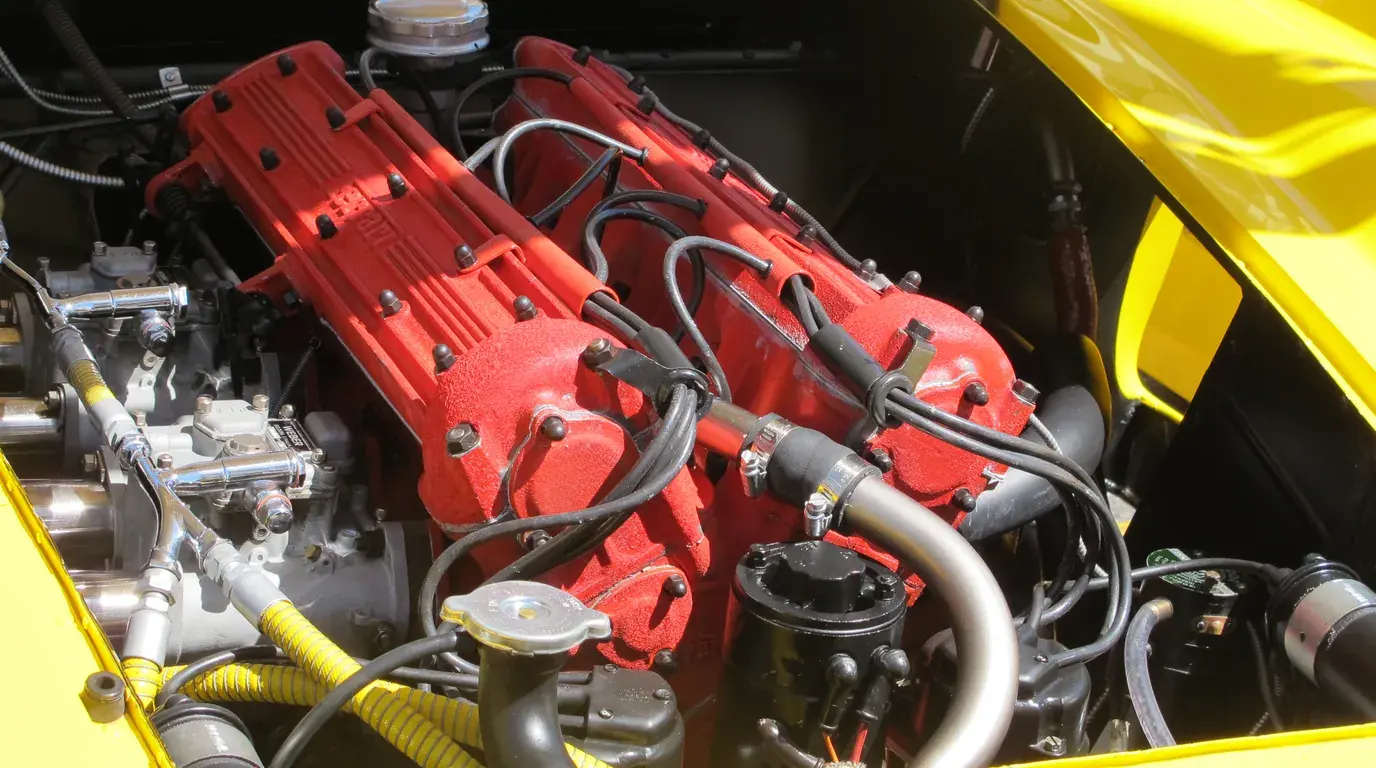
The short answer. A car has matching numbers when its major components — chassis or body, engine, and on many marques the gearbox and axle — still carry the numbers the factory's build record says were fitted. To check: photograph every identifier, look at how each number is stamped and at the metal around it, compare the numbers with the car's file, and then compare them with the manufacturer's own record, ideally through a factory certificate. Numbers that agree with each other prove nothing on their own; numbers that agree with the factory record do.
"Matching numbers" appears in a great many classic car advertisements, and far fewer of those claims arrive with a factory record behind them. That gap is where a great deal of money quietly changes hands on trust.
The phrase is worth understanding precisely, because it does not mean what most sellers imply and it is not established by the thing most buyers check.
What the Phrase Actually Claims
A matching-numbers car is one whose major components still carry the identifiers they carried when the car left the factory — typically the chassis or body number and the engine number, and on many marques the gearbox and axle too.
Three things follow immediately, and all three are routinely missed.
It is a claim about records, not about stampings. A number on a component means nothing on its own. It means something only when it agrees with what the manufacturer's build record says was fitted to that chassis. Without the record, "matching numbers" reduces to "the numbers on this car are consistent with each other", which a competent forger can arrange.
It is not binary. A car can be matching on the engine and not the gearbox, or original in the block but not the heads. "Matching numbers" as a headline hides which components are included. Ask which.
It is not a condition statement. A matching-numbers car can be a rusty wreck and a rebuilt car with a replacement engine can be immaculate. The phrase addresses originality, and originality and condition are separate axes — see condition grading: what the words actually mean.
Why It Prices Cars
Originality is scarce, and it becomes scarcer every year, because engines fail and get replaced and the replacements are rarely documented well. That one-directional decline is why the premium persists and generally widens over time.
It also matters for the reason this site exists: originality is the part of a car's identity that can be independently established. A restoration quality claim is a judgement. A numbers claim is checkable against a factory record. The market pays for checkable.
How a Factory Certificate Establishes It
The strongest evidence available is a certificate from the manufacturer, because the manufacturer holds the build records.
Porsche publishes what its Classic Technical Certificate contains, and the wording is precise. The certificate documents "original vehicle data at the time it was delivered, such as billing date, the exterior and interior color and material, and optional equipment". Crucially, it documents "the engine and transmission numbers and types that are currently in the vehicle plus a verification of a match to original records". It also includes "an extensive technical check" evaluating "the exterior, interior, drive system, underbody and suspension", and Porsche states availability for vehicles not in standard production for at least ten years. (Porsche's own Classic Technical Certificate page, checked 6 September 2026.)
Read that middle sentence again, because it is the whole point of this article. The certificate is a comparison between what is physically in the car now and what the factory record says. That is a fundamentally different statement from a seller's assurance, and it is why a certificate changes a negotiation rather than decorating it. Which air-cooled 911 generations the certificate covers, and how the generations differ, is set out in Porsche 911 generations by year.
Other manufacturers operate comparable heritage certification and archive services under their own names and their own eligibility rules. We are not restating those rules here, because we could not open and read every one of those manufacturers' own pages on the day of writing, and an eligibility rule quoted from a third-party summary is exactly the kind of detail that turns out to be wrong. Ask the manufacturer's heritage department directly for the marque in front of you, and ask before you agree a price, because certification takes time.
What to Check Yourself, Before Spending Anything
A certificate is the destination. These are the steps that tell you whether it is worth starting.
Locate every identifier and photograph it. Chassis or body number, engine number, gearbox number, and any body or coachbuilder plates. Photograph them in focus, in situ, with enough surrounding metal to show context.
Check the stampings for consistency of execution. Factory stamping on a given marque and era has a characteristic font, depth, spacing and alignment. Numbers that are correct in content but wrong in execution — different character shapes, uneven depth, suspicious spacing, a surface that has been dressed and restamped — are the specific failure a specialist looks for. This is the reason the phrase "the numbers read correctly" is not the same as "the numbers are correct".
Look at the surrounding metal. Restamping usually leaves evidence around the stamping, not in it: grinding marks, filler, an area of paint or plating that differs from its surroundings, or a pad that sits at a subtly wrong height.
Read the file for internal contradictions. Service records, old registration documents, previous advertisements and restoration invoices should tell one consistent story. An invoice for an engine rebuild that names a different engine number than the one in the car today is not a minor discrepancy — it is the answer.
Ask what was replaced and when. A car of forty or fifty years old has had components replaced. A seller who describes that history straightforwardly is easier to trust than one who insists nothing has ever been touched, which is rarely true and never verifiable.
When the Numbers Do Not Match
A non-matching car is not worthless and should not be treated as though it were. It is a different, cheaper thing, and there are good reasons to buy one.
What matters is that the replacement is documented and disclosed. A car with a period-correct replacement engine, an invoice for the work and an honest description is a legitimate object with a clear identity. A car whose engine was replaced at an unknown point by an unknown person and is now described as original is a problem, whatever the metal says.
Two specific situations to handle carefully:
- Factory replacement engines. Some manufacturers supplied replacement units, sometimes with their own numbering convention. A car with a documented factory replacement is in a better position than one with an unknown unit, and the certificate route is how you establish which you have.
- Reunited engines. An original engine that left the car and later returned is a real and valuable circumstance — but the chain of custody for the engine has to be as solid as the chain for the car, and it usually is not.
The Questions to Ask a Seller
- Which components are you describing as matching, specifically?
- What evidence supports that — a factory certificate, a build record, or an inspection?
- May I have the certificate reference and check it with the manufacturer myself?
- What components have been replaced during the car's life, and when?
- May an independent specialist of my choosing inspect the stampings?
- Will you warrant the matching-numbers description in writing?
Question five is the one that resolves most negotiations quickly. A seller with a genuine car has no reason to refuse it.
The Counter-Argument
Here is the position the enthusiast press rarely takes: for a great many cars, matching numbers is worth far less than the market pretends, and chasing it distorts buying decisions.
The premium is real and durable at the top of the market, on rare and significant cars where originality is the primary thing being bought. Further down, it can be worth less than a comprehensive service history, a rust-free shell, or a well-documented mechanical rebuild — and buyers routinely pay a matching-numbers premium for a car in worse condition than a non-matching alternative at the same money.
The sane framing: matching numbers is one input among several, it is most valuable where the car is most valuable, and it is only worth a premium when it is verified. An unverified matching-numbers claim is worth nothing at all, and paying for one is the most common expensive mistake in this corner of the market.
For the physical side of the same transaction, see how to inspect a classic car before buying; for how documentation prices objects generally, the five documents that move price; and for the insurance consequence, agreed value cover. How originality feeds into value across the market is covered in the classic car investment guide, and keeping an original car original in preserving collector cars.
Frequently asked questions
What does matching numbers mean on a classic car?
That the car's major components still carry the identifying numbers recorded for that chassis when it left the factory — usually the engine, and on many marques the gearbox and axle as well. It is a statement about originality, not about condition.
How do I check if a car has matching numbers?
Photograph the chassis, engine and gearbox numbers in place, check the stampings and surrounding metal for signs of restamping, compare them with the service and registration file, and then with the manufacturer's build record — a factory certificate, where the maker offers one, is the strongest evidence.
Does Porsche verify matching numbers?
Porsche's Classic Technical Certificate documents the engine and transmission numbers currently in the car "plus a verification of a match to original records", along with the car's original delivery data and a technical check. Porsche states it is available for vehicles not in standard production for at least ten years (checked 6 September 2026).
Is a car without matching numbers worth less?
Usually, and most at the top of the market where originality is what is being bought. But a documented, disclosed replacement engine is a legitimate car at a lower price; an undocumented one described as original is the real problem.