Disclosure: this page contains affiliate links. If you sign up through them we may earn a commission, at no extra cost to you. It does not change what we write.
The short answer. In most collecting markets "excellent condition" is a description written by the seller, not a defined grade, and "Ex" is simply shorthand for it. Only a few categories publish a real grading scale — coins are the clearest example, where "Fine" is a defined middle grade, not a compliment. Everywhere else, ask what was replaced, who did the work, what it looks like under raking light, and what is missing.
Condition language sounds standardised. Across most collecting categories it is not — the same phrase carries different meaning between houses, between specialists, and between an auction catalogue and a private sale.
Where grades actually are defined
The contrast with a market that does grade formally is instructive. Coin collecting uses published scales: on the US Sheldon scale, Fine (F-12 to F-15) describes a coin with roughly half its design detail remaining, Very Fine (VF-20 to VF-35) about three-quarters, Extremely Fine (EF or XF-40 to 45) about 90%, and Mint State (MS-60 to MS-70) an uncirculated coin. British dealers use the same EF/XF abbreviation, and French and German dealers use their own terms for comparable grades.
Two lessons carry over to every other category. First, in a defined system an everyday word can mean something far weaker than it sounds — a "Fine" coin has lost half its detail. Second, where no published scale exists, the same word has no fixed meaning at all, which is the position of most watches, paintings, bottles and cars.
Why the vocabulary is soft
Condition descriptions are written by the selling party. They are usually accurate about what they mention; the variability is in what they omit and how much interpretation a phrase permits.
"Excellent condition for its age" is doing a great deal of work in five words. So is "sympathetically restored", which describes an intention rather than an extent.
| Phrase | What it often signals | What to ask |
|---|---|---|
| "Excellent for its age" | Relative to peers, not absolutely | Excellent compared with what, specifically? |
| "Sympathetically restored" | Restoration occurred; scope unstated | Which parts, when, and by whom? |
| "Original throughout" | Usually about major components only | Does that include consumables and finishes? |
| "Light signs of use" | Entirely subjective | Photographs under raking light |
| "Recently serviced" | Work done; findings unstated | The service report, not the invoice |
| "Untouched" | Could mean preserved or neglected | Stored how, and for how long? |
None of these phrases are dishonest. They are compressed, and compression is where value moves.
The four questions that get past the adjectives
1. What was replaced, and when? Replacement is the single largest condition variable and the least visible in a photograph.
2. Who did the work? In every category, some restorers add value and some remove it. The name matters as much as the work.
3. What does the object look like under raking light? Angled light reveals surface interventions that flat catalogue photography flattens out.
4. What is missing? Absent components, papers and original fittings are rarely listed. They are, however, priced.
Where condition outweighs provenance
In categories with small communities — independent watchmaking, certain marques, editioned works — condition is often the dominant variable, because the population is small enough that any intervention is known and remembered.
That is the inverse of the usual advice, and it is worth knowing which category you are in before deciding what to prioritise. Our classic car storage guide covers the preservation side, and the documentation side is in the five documents that move the price.
Frequently asked questions
What is the abbreviation for excellent condition?
Sellers often shorten it to "Ex" or "Exc". Outside a published grading system that abbreviation has no fixed definition — it is the seller's description, so ask for photographs and specifics. In coin grading, the similar-looking "EF" or "XF" means Extremely Fine, a defined grade.
What does "ex condition" mean?
It means the seller describes the item as excellent. That usually signals a comparison with other examples of the same age rather than an absolute standard, and it says nothing about what has been replaced or restored. Treat it as the start of your questions, not the answer.
What does "fine condition" mean?
It depends on the market. In coins, Fine is a defined mid-level grade (F-12 to F-15 on the Sheldon scale) for a coin with roughly half its design detail left. In fine art and most other categories there is no defined "fine" grade, and top condition assumes minimal restoration and a stable support — something ultraviolet light and a proper condition report reveal, not the adjective.
Is a condition report from an auction house a guarantee?
No. It is a starting point prepared in volume, and the auction's conditions of sale say it is not a warranty. For anything significant, inspect in person or commission an independent report — the costs of buying at auction are set out in auction fees: what you actually pay, and reading the catalogue itself is covered in how to read an auction catalogue.
The Same Word Means Different Things by Category
Condition vocabulary is not portable. "Excellent" describes a different physical
reality in each of the markets this site covers, and applying one category's
expectations to another produces predictable disappointment:
| Category | What top condition assumes | The hidden variable |
|---|---|---|
| Fine art | Minimal restoration, stable support | Under UV, restoration becomes visible |
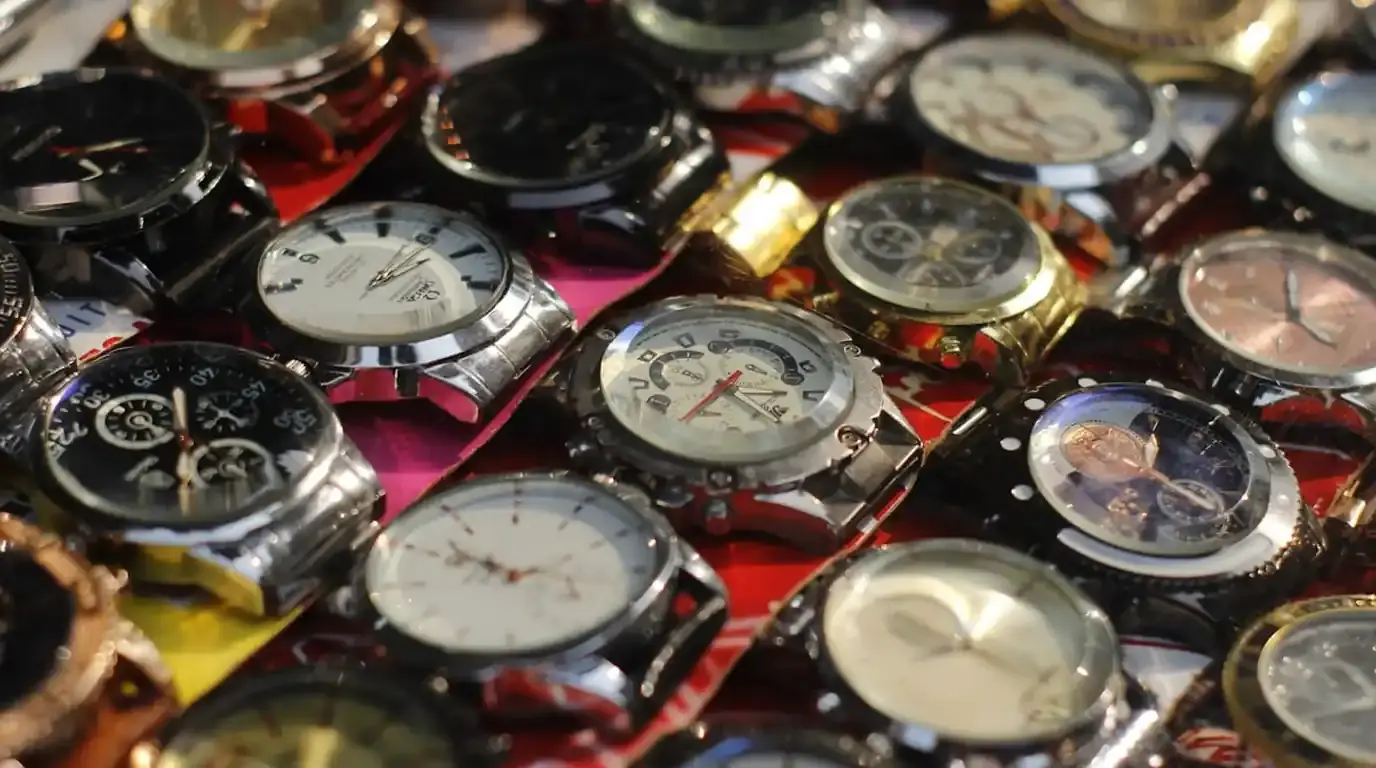
| Watches | Unpolished case, original dial | A polish is invisible to the untrained eye |
| Wine | Fill level, label, capsule, provenance | Storage history the bottle cannot show |
| Classic cars | Structure, then originality, then cosmetics | Filler and repair under good paint |
In every row, the hidden variable is the one that decides value and the one that a
photograph does not capture. That is not an accident: the market has already priced
everything visible.
Restoration Is Not a Binary
Sellers tend to present restoration as done or not done. Buyers should treat it as a
spectrum with four positions, because the price consequences differ sharply:
- Conservation — stabilising an object without altering it. Almost always
value-neutral or positive, and should be documented.
- Sympathetic restoration — reversible, documented, using appropriate
materials. A modest discount to untouched, and honest.
- Cosmetic restoration — done to make the object sell. Discount, and the extent
is often understated.
- Undisclosed restoration — the only one that is a problem in itself, because
it means the description you were given was wrong.
The question that separates them is not "has it been restored" but **"what was done,
by whom, when, and is it reversible"**. That question has a paper answer or it does
not, which is what actually tells you where on the spectrum you are.
Getting a Condition Report That Is Worth Something
A condition report is only useful if it is specific and attributed. Ask for:
- The name and qualification of whoever wrote it.
- Dated photographs under raking light, and for art, under ultraviolet.
- An explicit list of what was examined and what was not. A report that does not
say the caseback was opened, or the car was not put on a lift, is telling you so.
- Measurements where relevant — case dimensions on a watch that may have been
polished, fill levels on wine, panel gaps on a car.
Auction house condition reports are prepared quickly, in volume, and with legal
constraints on what can be asserted. They are a starting point and are usually
honest within their limits. They are not a substitute for your own inspection, and
they are explicitly not a warranty — the conditions of sale for that auction say so.
Where the Grade Stops Mattering
Two situations reverse the usual priority:
- Extreme rarity. For an object of which very few exist, condition sets the
price but rarely prevents the sale. Buyers accept condition they would refuse on a
common example.
- Objects valued as documents. Where an object's significance is historical
rather than aesthetic, originality outranks condition entirely, and restoration
actively destroys value.
Outside those two cases, condition and documentation together explain most of the
dispersion in price between superficially similar objects. Which is why the two
disciplines belong together, and why
the five documents that move price
is the companion piece to this one.