Disclosure: this page contains affiliate links. If you sign up through them we may earn a commission, at no extra cost to you. It does not change what we write.
The short answer. Porsche itself dates the air-cooled 911 to four generations: the original car (1963–1973), the G-Series (1973–1989), the 964 (1989–1994) and the 993 (1994–1998), after which the 996 (1998–2005) brought water cooling. Which one a collector should buy depends less on which is "best" than on what you want the car to do: the original cars reward originality research, the G-Series is the broadest and most documented market, the 964 adds the first all-wheel drive and modern assistance, and the 993 is the last air-cooled 911. Choose the generation by use, then choose the individual car by documentation.
This page is the map: what each generation is, in Porsche's own words, and how to choose between them. The money side — what holding one actually costs and what a certificate is worth at purchase — is in our separate guide to whether an air-cooled 911 is an investment.
Porsche 911 generations by year
Every year, engine figure and equipment item below is taken from Porsche's own *60 years of the Porsche 911* press kit (Porsche Newsroom, read 16 October 2026). Where the press kit does not state something, the cell says so rather than filling it from memory.
| Generation | Porsche's dates | Launch engine (Porsche's figure) | What changed, per Porsche |
|---|---|---|---|
| Original 911 | 1963–1973 | 2.0 litres, 130 PS | Rear engine, air-cooled flat-six; Sportomatic semi-automatic offered from 1967 |
| G-Series | 1973–1989 | 2.7 litres standard, 150 PS in the base model | New plastic bumpers to protect the body against parking damage |
| 964 | 1989–1994 | New 3.6-litre flat-six, 250 PS | Power steering, ABS, first all-wheel-drive 911, Tiptronic automatic from 1989 |
| 993 | 1994–1998 | 272 PS (entry model) to 450 PS (911 Turbo); displacement not stated | "For the last time, the engines in a Porsche 911 were air-cooled" |
| 996 (for reference) | 1998–2005 | 300 PS in the entry-level model | Water-cooled engine — the end of the air-cooled line |
Two things follow from that table. First, "air-cooled" is not a single category: it spans thirty-five years and four quite different cars. Second, the boundaries overlap by model year (1973, 1989, 1994, 1998), so a car's registration year alone does not tell you which generation it is. The chassis number and the factory record do.
The original 911 (1963–1973): a research project
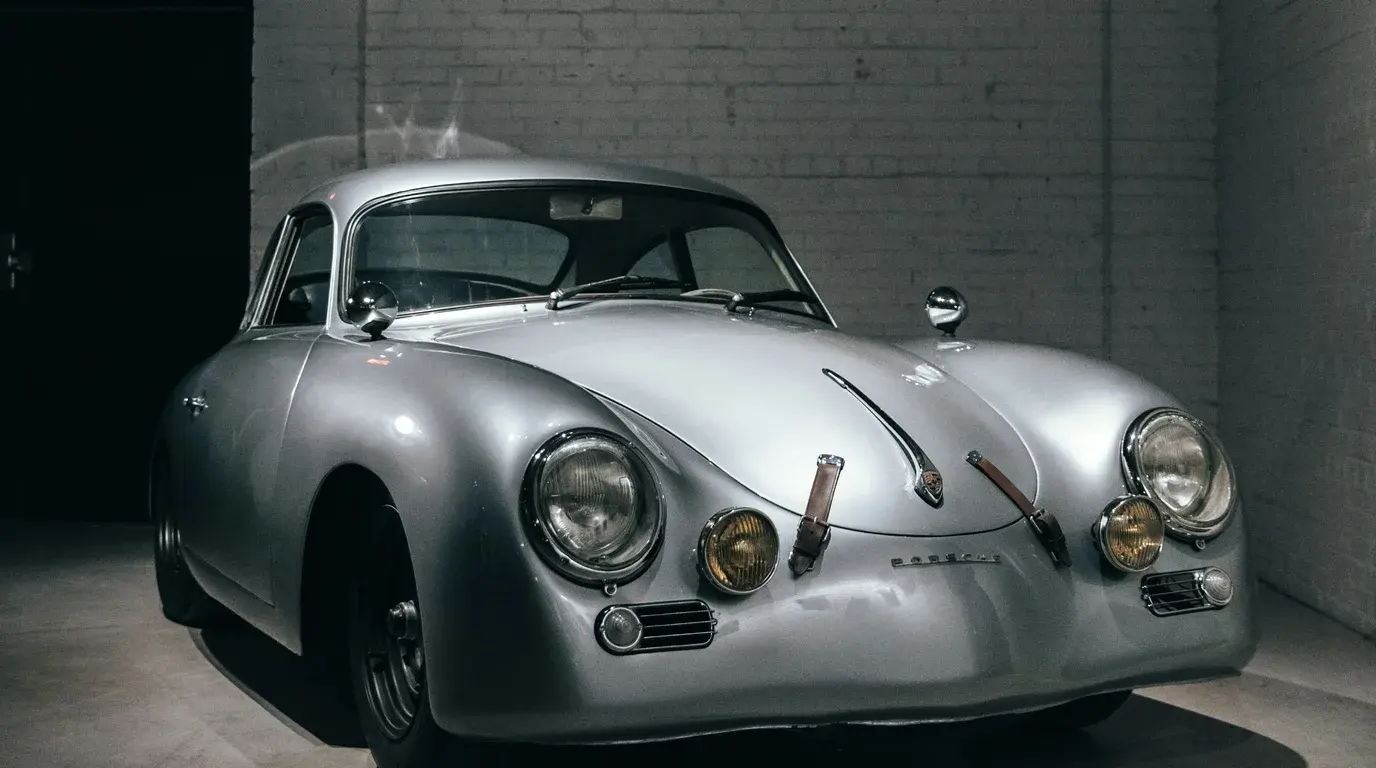
Porsche dates the first generation from 1963, with a 2.0-litre, 130 PS flat-six. The early cars are the ones where specification, originality and history are hardest to establish, simply because the cars are oldest and have passed through the most hands. That makes them the generation where the buyer's homework is the largest share of the job.
The best-documented example of how much specification matters is the Carrera RS 2.7 at the very end of this era. Porsche's own history of the car says it planned 500 for Group 4 homologation and built 1,580 in total: 200 lightweight "Sport" cars (option M471), 55 racing versions, 17 base vehicles and 1,308 "Touring" cars (M472). The Sport weighed 115 kg less than the Touring, at 960 kg; the 2.7-litre injected flat-six made 210 PS at 6,300 rpm.
Worked example — why a production split is a provenance tool. Divide each variant by the total Porsche gives:
- Touring (M472): 1,308 ÷ 1,580 = 82.8%
- Sport (M471): 200 ÷ 1,580 = 12.7%
- Racing version: 55 ÷ 1,580 = 3.5%
- Base vehicles: 17 ÷ 1,580 = 1.1%
So roughly one RS 2.7 in eight left the works as a Sport. A car offered as a Sport is, statistically, an exceptional claim, and it needs exceptional evidence — the factory record, not a seller's description. The same logic applies to every limited variant in every generation: the smaller the factory number, the larger the incentive to create one, and the more the paperwork is worth.
The G-Series (1973–1989): the broadest market
The G-Series ran for sixteen years, longer than any other air-cooled generation, and its plastic bumpers are the quickest way to recognise it. Length of production is what makes it the most practical generation for most collectors: more cars, more specialists, more published sale results, and therefore more comparable evidence when you are deciding what a particular car is worth.
That breadth cuts both ways. Because so many were built across so many specifications, two G-Series cars of the same year can be very different propositions. The comparison that matters is not year against year but specification, condition and history against the same specification, condition and history — the discipline set out in matching numbers and factory documentation.
The 964 (1989–1994): the first modern 911
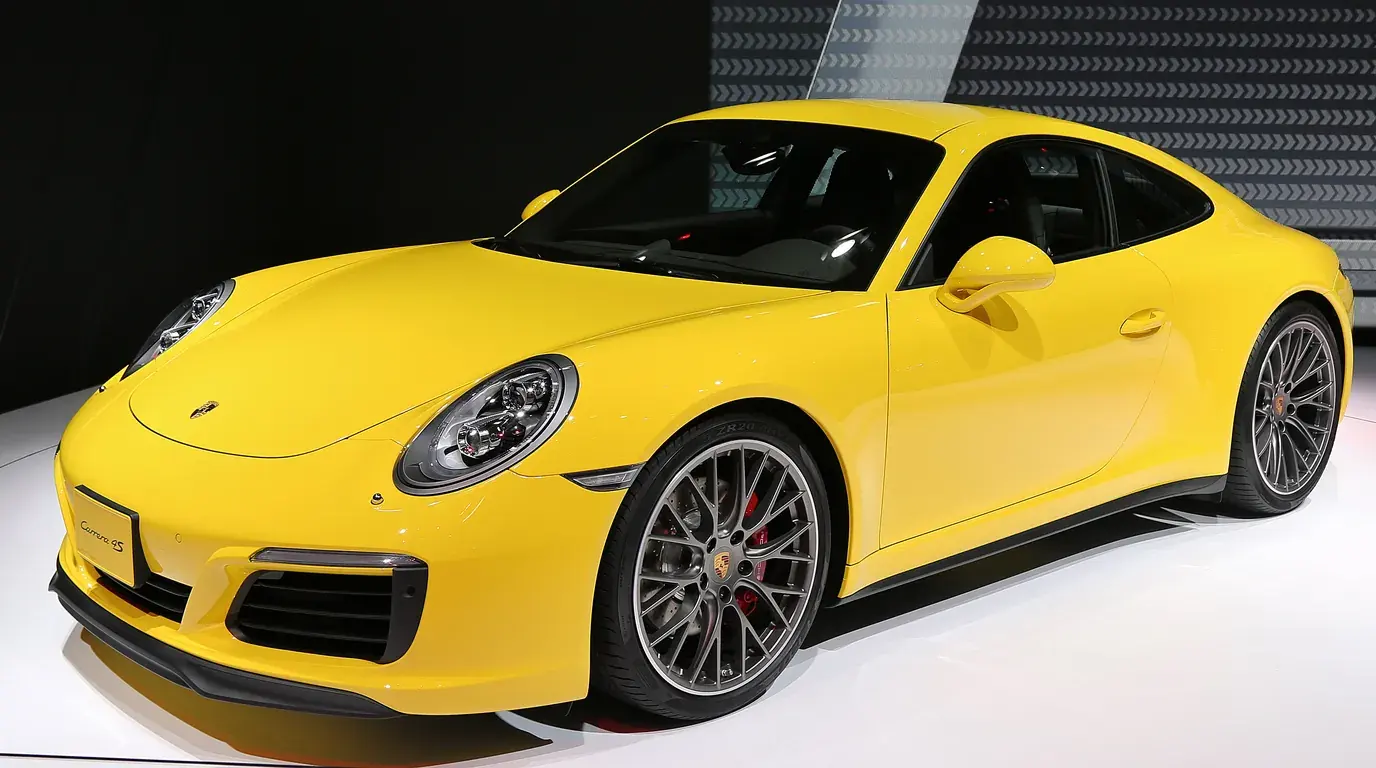
Porsche describes the 964 as bringing a newly developed 3.6-litre engine, power steering, ABS, a more efficient heater and central locking, the first all-wheel-drive 911 and, from 1989, the Tiptronic automatic. For a collector the significance is that this is the first generation where you choose between drivetrains and transmissions that did not exist before: rear- or all-wheel drive, manual or Tiptronic. Those choices are specification, and specification is what separates two otherwise similar cars at resale, so record exactly which combination you are looking at before you compare it with anything.
The 993 (1994–1998): the last air-cooled 911
Porsche's own line is the whole story: "for the last time, the engines in a Porsche 911 were air-cooled." Outputs ranged from 272 PS in the entry model to 450 PS in the 911 Turbo. Being the last of a line is a lasting source of interest, which is why "air-cooled Porsche 911 years" is such a common search: the answer is that the air-cooled era ends with the 993 in 1998.
How to choose a generation
Choose by what the car is for. The table below is our framework, not a price ranking — we print no values on this page, because a model-average figure hides the spread between individual cars that the rest of this guide warns about.
| If your priority is… | Generation to look at first | Why |
|---|---|---|
| Regular driving on modern roads | 964 or 993 | Porsche lists power steering and ABS from the 964 onwards |
| The widest choice of cars and specialists | G-Series | Sixteen-year production run, the longest air-cooled generation |
| Originality research as part of the pleasure | Original 911 | Oldest cars, most ownership changes, most to verify |
| The end of the air-cooled line | 993 | Porsche's "last time… air-cooled" generation |
| An automatic | 964 or later (Tiptronic), or an original car with Sportomatic | Porsche dates Sportomatic to 1967 and Tiptronic to 1989 |
Then choose the car, not the generation. Within any generation, the order of questions is the same: is it what it claims to be (chassis, engine and gearbox numbers against factory records), what has been done to it (restoration, repaint, replacement parts), and can you prove both in writing? Porsche's Classic Technical Certificate, which compares the numbers in the car now with the factory's original records, covers the 911 F and G models, the 964 and the 993 according to Porsche's own page.
Inspection: where generation-specific knowledge pays
Use a 911 specialist rather than a generalist, and make the inspection generation-aware. The general checklist — corrosion in the structure, accident repair, originality of drivetrain and paint, continuity of the service file — is in our step-by-step guide to inspecting a classic car before buying. If the car will be bought at auction, the catalogue and condition-report language is decoded in the classic car auction guide, and once it is yours, storage and upkeep decides how well it keeps.
Frequently asked questions
What years are the air-cooled Porsche 911s?
From 1963 to 1998. Porsche's own dates are the original 911 (1963–1973), the G-Series (1973–1989), the 964 (1989–1994) and the 993 (1994–1998); the 996 that followed from 1998 introduced the water-cooled engine.
Which was the last air-cooled Porsche 911?
The 993. Porsche states that with the 993, "for the last time, the engines in a Porsche 911 were air-cooled."
When did the 911 get all-wheel drive and an automatic gearbox?
All-wheel drive arrived with the 964, which Porsche describes as the first 911 with it, and the fully automatic Tiptronic was offered from 1989. Earlier cars could be ordered with the semi-automatic Sportomatic from 1967.
How many Carrera RS 2.7s were built?
Porsche gives 1,580 in total: 200 Sport (M471), 55 racing versions, 17 base vehicles and 1,308 Touring (M472). Only about one in eight was a Sport, which is why a Sport claim needs the factory record behind it.
Which 911 generation is the best to buy?
There is no single answer, which is why this guide ranks by use rather than by price. The 964 and 993 suit regular driving, the G-Series offers the widest choice, and the original cars reward buyers who enjoy originality research. Whichever you pick, buy the best-documented car you can rather than the cheapest example of the generation you want.