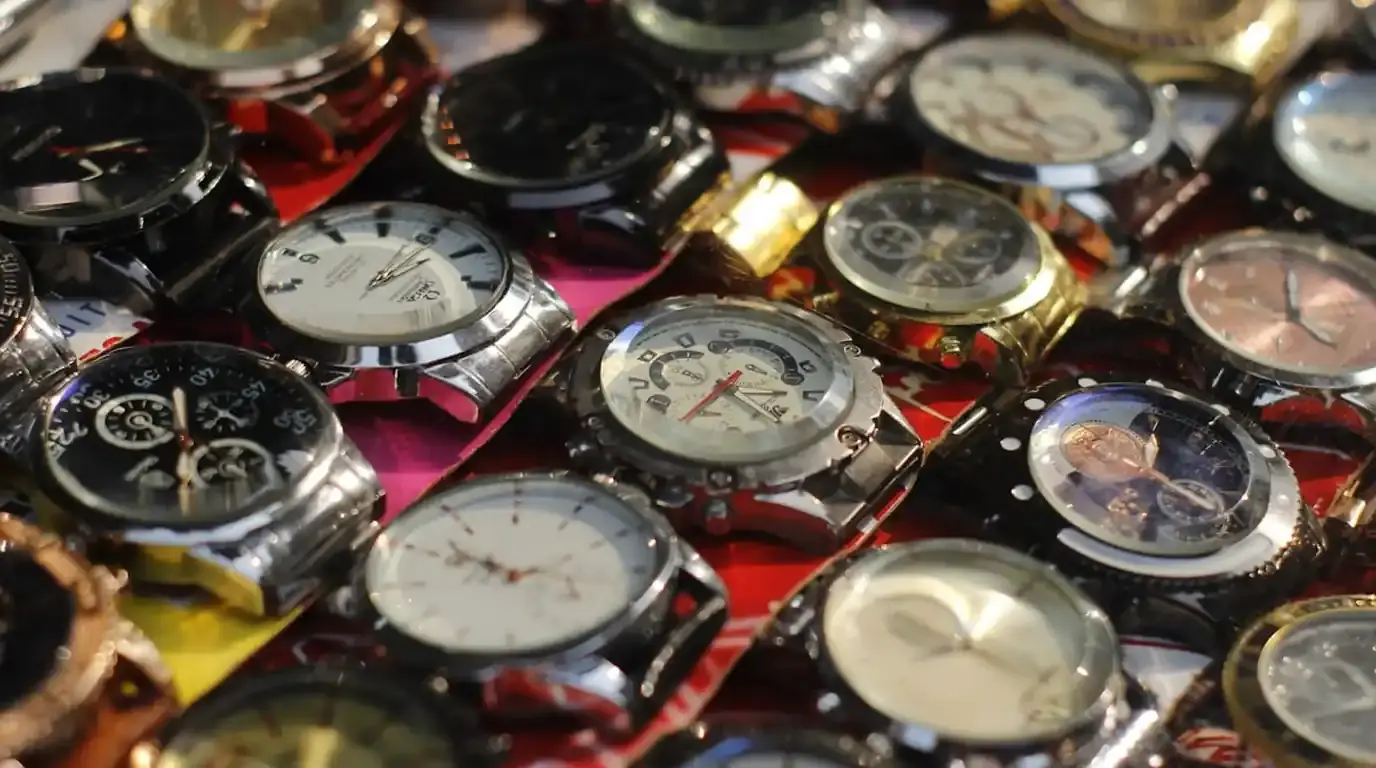
Counterfeit watches have stopped being obvious. The category the trade calls "super fakes" replicates external detail closely enough that a confident glance across a table proves nothing at all. If you are buying pre-owned, a repeatable process is the only defence that scales.
This is that process, in order. It is deliberately procedural — the wider treatment of the subject, including what authentication costs and how the market handles disputes, sits in the watch authentication guide.
Before Anything Else: What This Page Will Not Tell You
Two omissions, stated up front, because they are the difference between a useful guide and a confident one.
We do not print brand-specific serial number locations or production date tables. They vary by reference and by era, they have changed more than once, and getting one wrong sends a buyer looking in the wrong place and concluding the wrong thing. Get them from the manufacturer or from a specialist for the exact reference in front of you.
We could not retrieve several manufacturers' own authentication pages when preparing this article — their sites refused automated access on 6 September 2026. Rather than restate what third-party summaries claim those pages say, we have left those brands' specifics out. Where a manufacturer's own wording is quoted below, it is quoted because we opened the page and read it.
Step 1 — Record the Numbers Before You Negotiate
Every serious watch carries reference and serial numbers. Get both, in writing, before any money is discussed, and photograph them in focus.
Two reasons this comes first. It gives you something to verify independently, away from the seller and away from the pressure of the room. And a seller who will not provide them has answered the more important question already.
Step 2 — Go to the Manufacturer's Own Record
This is the highest-value step in the process and the one most buyers skip.
Patek Philippe is the clearest published example. It offers an Extract from the Archives, which it describes as "a partial transcript regarding a particular timepiece from our Archives, as meticulously recorded since 1839". Its stated conditions are specific: the service fee is 500 Swiss Francs and is "fully refundable in case of ineligibility of the timepiece"; the date of first sale must exceed ten years from the request date; and "One single Extract can be requested per 12-month period, per timepiece". (Patek Philippe's own FAQ, patek.com, checked 6 September 2026.)
Two further points from the same source matter at purchase. Patek states that a Certificate of Origin "can unfortunately never be re-issued" — so a missing original cannot simply be replaced, and any offer to do so should be treated as a red flag. And it directs that case back removal be carried out only by "an Authorized Retailer or an Authorized Service Center".
For pre-owned purchases specifically, Patek's own advice is to consult "an auction house or a dealer specialized in selling and buying older timepieces". That is a manufacturer telling you where the expertise actually lives, and it is worth taking literally.
Other houses run comparable archive or certification services under their own names and terms. Ask the manufacturer directly what it offers for your reference, what it costs, and how long it takes — and build that lead time into the transaction rather than discovering it afterwards.
Step 3 — Examine the Dial, Case and Bracelet Under Magnification
A loupe of reasonable power is enough. You are not looking for a single tell; you are looking for inconsistency.
- Printing. Text on a genuine dial is crisp and evenly applied at magnification. Fuzzy edges, uneven ink density and poorly registered text are the classic failures because printing at that fineness is genuinely difficult to replicate.
- Luminous material. Applied evenly, sitting where it should, consistent in colour across all markers. Patchy or differently-aged lume across the same dial is a strong signal.
- Surface transitions. High-end case finishing has sharp, deliberate boundaries between brushed and polished areas. Blurred or wandering transitions indicate either a counterfeit or heavy refinishing — and heavy refinishing is itself a valuation issue.
- Engraving depth and consistency. Shallow, uneven or oddly spaced engraving is a warning.
- The bracelet and clasp. Frequently the weakest part of a fake, because it is the part buyers examine least.
Step 4 — Feel the Mechanics
Some things do not photograph. Wind the crown: it should engage cleanly and click into position decisively, not vaguely. Set the hands: motion should be smooth and precise, with no slack. Operate any complication and confirm it does what the reference is supposed to do — a chronograph that resets imperfectly, or a date that changes lazily around midnight, is telling you something.
None of this is conclusive alone. All of it is diagnostic in combination.
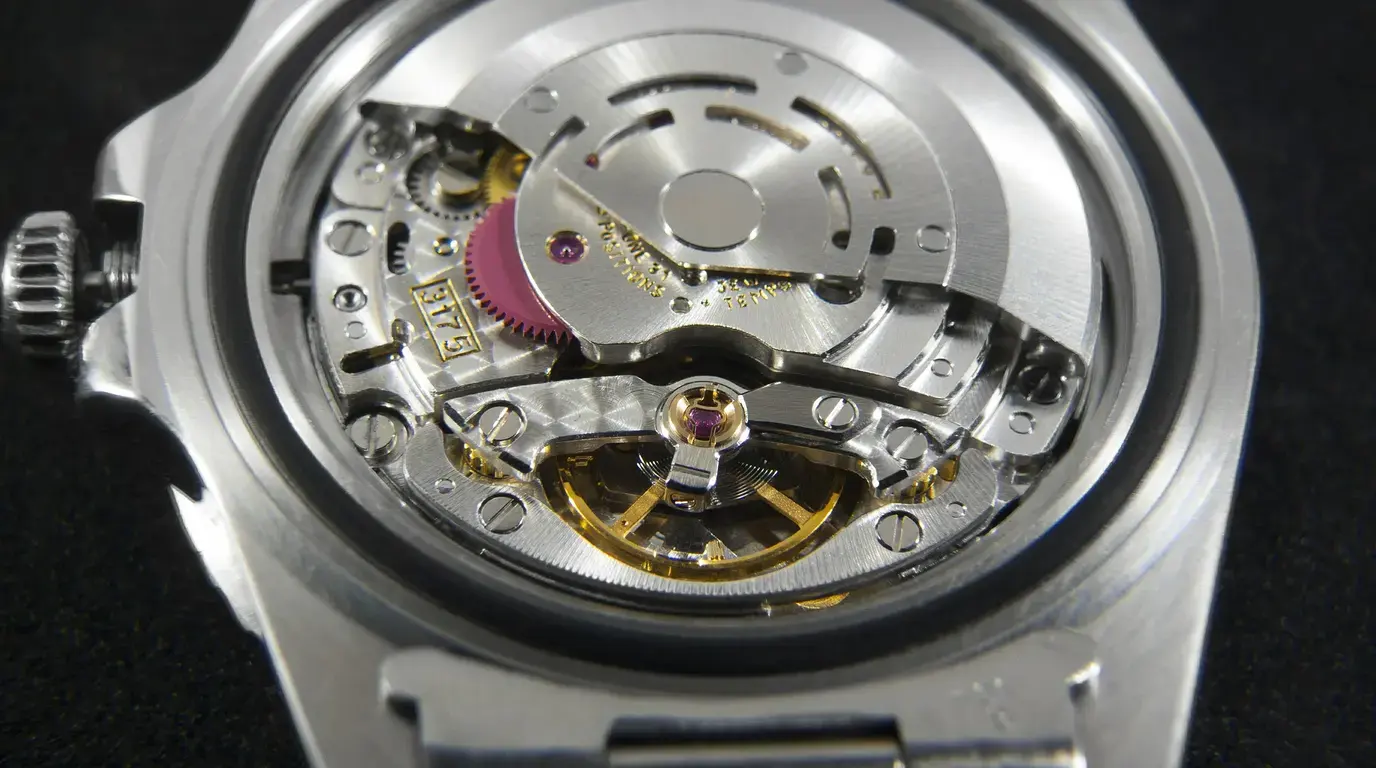
Step 5 — Have the Movement Inspected by an Independent Specialist
For any purchase of consequence, engage a watchmaker who specialises in that brand and who is not the seller's watchmaker. Note Patek's instruction above about who may open a case back; the same principle applies broadly, and an unauthorised opening can itself devalue a watch.
A competent specialist will confirm that the movement is what it should be for the reference, identify replacement parts, and flag work that was done badly. Replacement parts are not automatically disqualifying — most watches of any age have had service parts fitted — but they must be known, because they change what the watch is worth.
The single most useful output is a written list: what is original, what is not, and what needs attention. That list is your negotiating position.
Step 6 — Demand the Paper
Ask for all of it, and accept that some will be missing:
- Original box and papers, including the warranty or guarantee document
- Any manufacturer archive extract or certificate, and its date
- Service history, with invoices naming who did the work
- The original purchase receipt, where it survives
- Photographs of the watch at earlier points in its life, if the seller has them
A watch with no documentation is not necessarily a fake. It is a watch that must be priced to reflect the absence and authenticated more rigorously, and both of those are your call to make rather than the seller's.
For how documentation translates into price generally, see the five documents that move price.
Step 7 — Prefer Sources That Have Already Done This
The risk drops sharply when you buy from a manufacturer-backed pre-owned programme, a major auction house with a specialist watch department, or an established independent dealer with a long trading history and a reputation to lose.
What those three share is that authentication happened before the piece was listed, and someone identifiable is standing behind it. That is precisely what you are paying for when you pay above the private-sale price — and on the arithmetic below, it is frequently the cheaper option.
The Honest Arithmetic
Authentication is not free. An archive extract carries a fee and a wait. An independent specialist inspection carries a fee. Both take weeks rather than days.
Set that against the alternative. The downside of an undetected fake is not a discount — it is a total loss, plus the awkward question of what you do with an object you cannot honestly resell. Against that, the combined cost of doing this properly is small, and it is spent whether the answer is good or bad. Budget for it as part of the purchase, not as an optional extra you might skip if the watch looks right.
The Counter-Argument
The reasonable objection to all of the above is that it makes buying a pre-owned watch slow and expensive enough that you might as well buy new.
Sometimes that is the right conclusion, and it is worth saying so. But the process above is not equally heavy at every level. Steps 1, 3, 4 and 6 cost nothing but attention and will catch most of what circulates. Steps 2 and 5 are where the money and the waiting are, and they earn their cost on the pieces where a mistake would genuinely hurt.
Scale the process to the consequence of being wrong. That is the whole judgement, and it is yours to make rather than a rule anyone can hand you.
Our wider coverage of the asset class, from reference selection to resale, sits on the watch investment hub.