The Authentication Challenge Has Changed
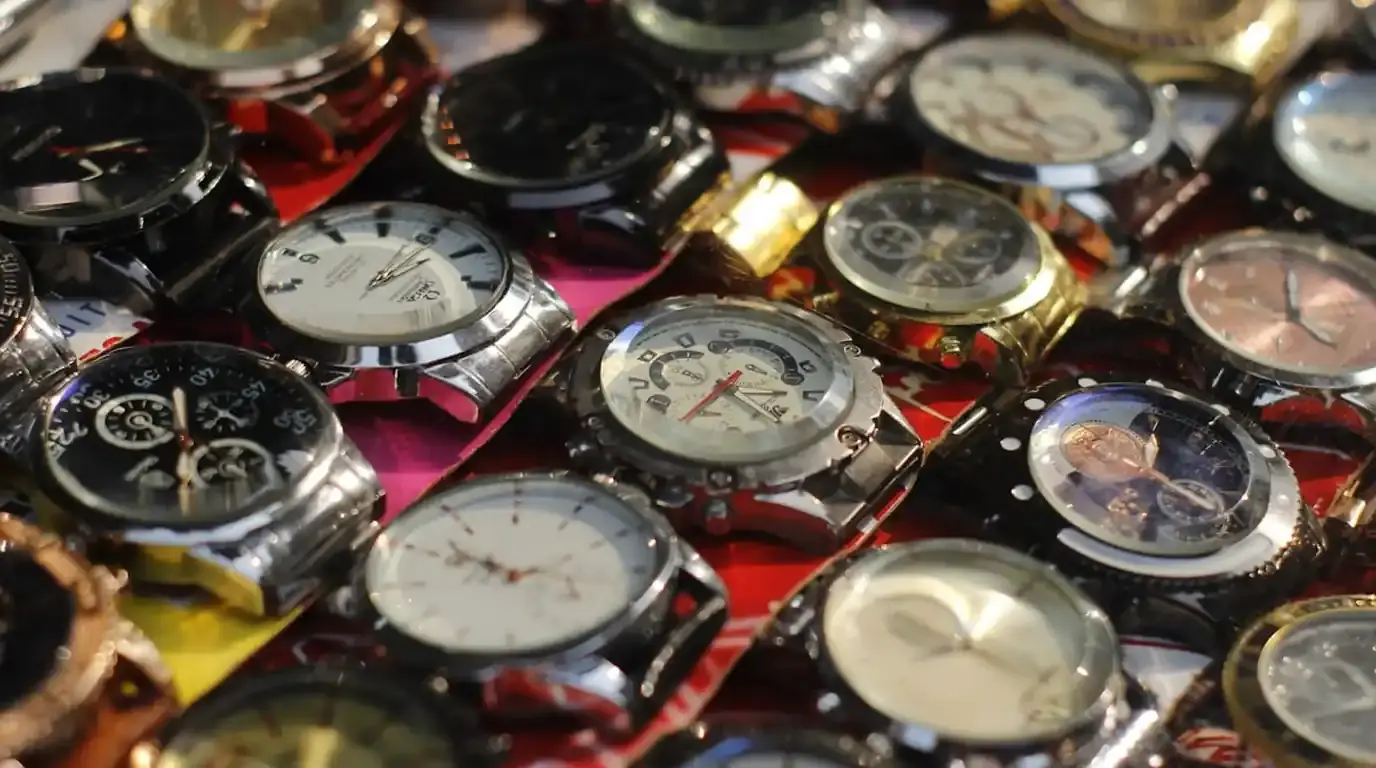
In 2015, a trained eye could reliably identify a counterfeit luxury watch at arm’s length. In 2026, the best “super clone” operations produce watches that fool experienced dealers without equipment.
The industry response has been systematic: box and papers verification, serial number database checks, movement inspection, and independent authentication services have all become standard practice for transactions above £5,000.
The Authentication Hierarchy
Reference documentation: Box, papers, warranty card and purchase receipt are the first line of verification. These documents are increasingly difficult to forge because: manufacturer security printing has advanced, database cross-referencing is standard, and serial numbers on cases, movements, and papers must align.
Serial number verification: Rolex, Patek Philippe and Audemars Piguet maintain databases accessible to authorised dealers for serial number verification. For buyers through grey market channels, services like Watch Certification (UK) and the BSCI standards organisation provide equivalent verification.
Movement inspection: The watch movement is the last reliable tell between authentic and counterfeit. Opening the caseback and comparing the movement against manufacturer references — decoration quality, engraving depth, finishing on bridges — requires expertise but is definitive. No counterfeit movement yet replicates the Geneva stripes and côtes de Genève finishing of an authentic movement under 20x magnification.
Professional authentication services: Watchfinder’s Authentication Guarantee, Chrono24’s Authenticity Guarantee, and HODINKEE’s Shop certification all provide professional authentication with documented liability for misrepresentation.
The Most Commonly Counterfeited References
In order of counterfeit sophistication encountered in European grey markets:
- Rolex Submariner 124060
- Rolex Daytona 116500LN
- Patek Philippe Nautilus 5711
- AP Royal Oak 15500
- Rolex GMT-Master II “Batman” 126710BLNR
If purchasing any of these references privately, professional authentication before completion is non-negotiable.
Building an Authenticated Purchase Process
For any private purchase above £3,000: require box and papers, request serial number for pre-purchase dealer database check, and arrange for professional authentication before funds transfer. The cost of authentication — typically £100–300 — is negligible relative to the risk of a counterfeit purchase.
What Each Layer of Checking Can and Cannot Establish
Authentication is often described as a single verdict. It is better understood as
four separate questions, answered by different means, with different reliability:
| Question | Answered by | Reliability |
|---|---|---|
| Is the case genuine? | Physical inspection, finishing, weight | High for experienced eyes |
| Is the movement correct for the reference? | Opening the caseback, calibre match | Very high |
| Are the dial and hands original to it? | Specialist knowledge, lume comparison | Variable; this is where money is lost |
| Is the object's history what is claimed? | Papers, service records, archive extract | Depends entirely on documents |
The third row is the one that matters most in practice. A watch can be entirely
genuine as a machine and still carry a redialled face or replacement hands, and the
difference between an original and a service dial on a desirable vintage reference
can be a very large proportion of the value. It is also the layer that a photograph
cannot settle.
Manufacturer Archives and Their Limits
Several houses will confirm, for a fee and on request from the owner, what a given
serial number left the factory as and when. This is the strongest single check
available and it should be obtained for any significant vintage purchase.
Understand precisely what it establishes: it confirms the **original
configuration** of that serial number. It does not confirm that the watch in front
of you is that watch, and it does not confirm the current parts are the original
ones. An archive extract combined with a physical inspection is powerful. An archive
extract sent to you as a photograph, unaccompanied, proves only that such a document
exists somewhere.
Turnaround times run to weeks or months and vary by house. Where a sale cannot wait,
that is a reason to price the uncertainty, not to skip the step and assume.
The Two Fraud Patterns Worth Rehearsing
Most losses on genuine-looking watches follow one of two patterns, and both are
defeated by process rather than by expertise:
- The correct watch with the wrong parts. Case, movement and bracelet are
genuine; the dial is a modern reproduction, or the bezel and hands have been
swapped for a rarer variant. Defence: compare against verified examples of the
same reference and production period, and get a specialist to open it.
- The correct paperwork with the wrong watch. Papers, box and even a service
record exist and are authentic — for a different example of the same reference.
Defence: check that the serial number on the papers matches the serial on the
case, physically, with the watch in your hand.
The second pattern is the more expensive one and the easier to prevent. It costs
thirty seconds. The general form of the failure — a true document attached to the
wrong object — recurs across every category, and it is set out in
how fakes get past good buyers.
Building the Purchase Around the Check
The sequence that keeps you safe is boring and works:
- Agree the price subject to independent authentication.
- Agree who pays for the check and who holds the funds while it happens.
- Have the check performed by someone with no interest in the sale.
- Get the outcome in writing, including any parts identified as non-original.
- Keep that report. It becomes part of the watch's file for the next owner.
A seller who resists step three has told you something useful. A seller who welcomes
it has also told you something useful. For the step-by-step version, see