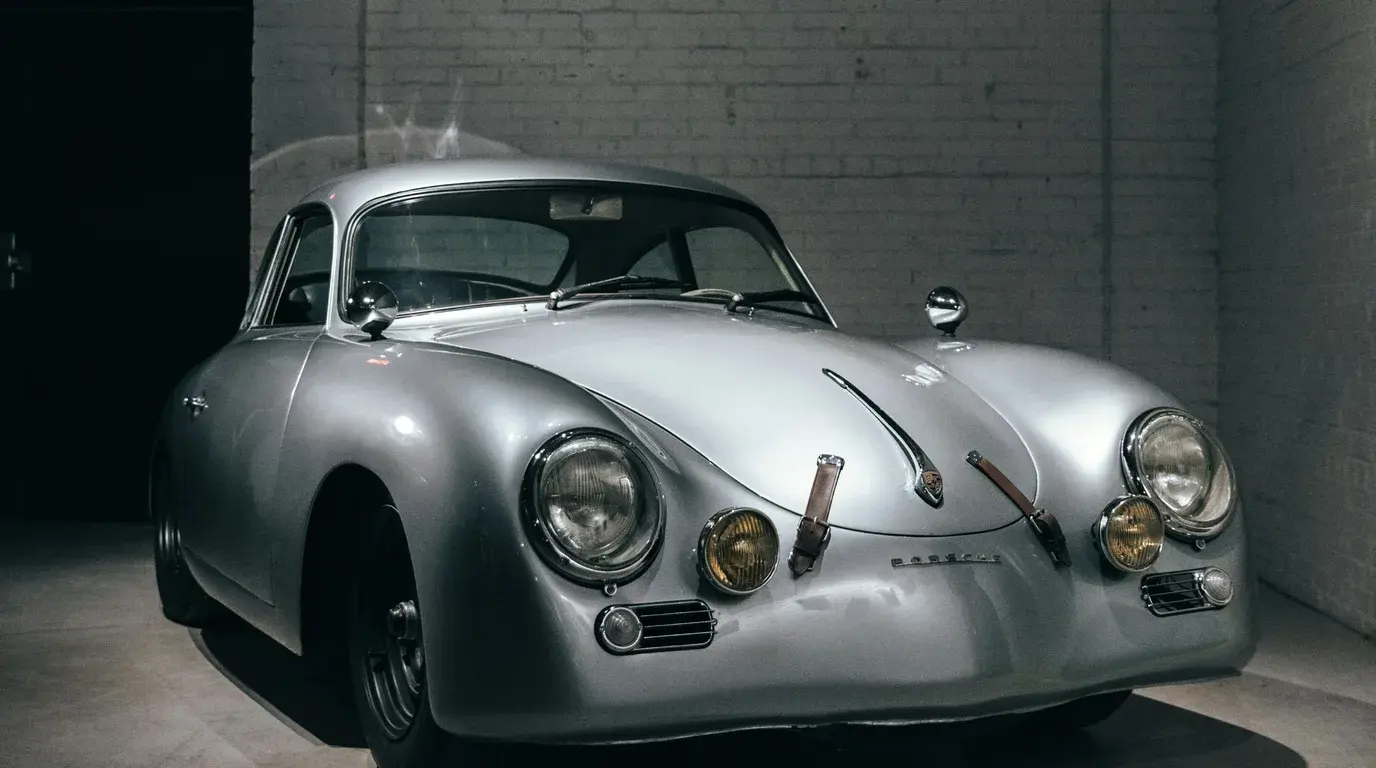
Why Air-Cooled Became a Category of Its Own
The air-cooled 911 — the cars built before Porsche moved the 911 to water cooling — is the most actively traded classic car category in its price band. That is not a claim about returns. It is a claim about structure, and the structure is the reason the category behaves the way it does.
The engineering is exceptionally well understood. The flat-six is among the most documented, most rebuilt and most supported classic powerplants in existence. Specialists on every continent can take one apart and put it back together to a known standard. A car you can have properly serviced anywhere is a car with a wider buyer pool.
The owner community is institutional, not incidental. Marque registers, national clubs, model-specific literature and long-running events give these cars a social infrastructure that most classics lack. That infrastructure is what keeps knowledge circulating and buyers findable.
Originality is a shared value, not a niche preference. In some marques, modification is celebrated. In air-cooled Porsche, the default expectation is that a car is what it says it is, and deviation is disclosed. That expectation is what makes documentation worth money here.
The manufacturer still supports the cars. Porsche runs a Classic operation with parts supply and its own certification. That is a structural advantage most forty-year-old cars simply do not have.
Why This Page Carries No Price Table
An earlier version of this page listed specific values and percentage corrections for individual models. Those figures were not traceable to a source we could open and check, so they have been removed rather than refreshed.
The reason matters beyond one page. A price guide figure for "a 964" is an average across cars whose real spread is enormous, and quoting it invites exactly the mistake the rest of this article warns against. If you want current levels, take them from published auction results for the same model in the same specification and condition, sold recently, and build the set yourself. That set is usually small, and its smallness is the most honest liquidity signal you will get.
Specification Beats Model Year
Within air-cooled values, the spread between two cars of the same model year routinely exceeds the spread between model years. The variables are consistent across generations:
- Original colour and interior. A factory-correct rare colour supports a premium. A repaint into a currently fashionable colour usually does not, and an undisclosed one damages value outright.
- Sunroof, air conditioning, rear seats. Preferences differ by market and by model, and nothing here is universal — which is exactly why the comparable set has to be built from actual sales of the same specification rather than from a model average.
- Numbers-matching drivetrain. A replacement engine is not fatal, but it must be documented, and it reprices the car. See matching numbers and factory certificates for how that is established.
- Continuous history. A thin file on a car of this age is common. It is still a discount.
- Homologation and limited-production variants. Where a variant exists in genuinely small numbers, the premium is real — but so is the incentive to fake one, and the certification question below becomes non-optional.
The practical instruction: the correct comparable is not "the same model". It is the same model, in the same specification, in the same condition, sold recently, publicly.
The Certificate Question
Porsche's own Classic Technical Certificate is the closest thing to a factory answer on originality, and Porsche describes what it does in its own words. The certificate documents "original vehicle data at the time it was delivered, such as billing date, the exterior and interior color and material, and optional equipment", and it verifies "the engine and transmission numbers and types that are currently in the vehicle plus a verification of a match to original records". It also includes "an extensive technical check" covering "the exterior, interior, drive system, underbody and suspension". Porsche states it is available for vehicles that have not been in standard production for at least ten years. (Porsche's own Classic Technical Certificate page, checked 6 September 2026.)
Read that second quotation carefully, because it is the one that matters at purchase. It is a comparison between what is in the car now and what the factory records say left the works. That is a different and far more useful statement than a seller's assurance that a car is "matching numbers", and it is why a certificate materially changes a negotiation.
We are deliberately not quoting a fee here. Prices for this service vary by market and by partner, and an out-of-date number would be worse than none. Ask the Classic partner directly.
Reading a Correction Honestly
Values in this category ran hard for an extended period and then softened. Two readings of that are both partly true and worth holding together.
- The category matured. Prices that rose fastest on speculative demand fell when that demand thinned. That is a normal repricing, not a verdict on the cars.
- The dispersion widened. In a soft market, exceptional cars hold and ordinary cars fall. The average tells you almost nothing about either.
The consequence for a buyer is specific: a correction improves the terms on which you buy good cars far more than it improves the terms on ordinary ones. The discount on a compromised car in a weak market is not an opportunity — it is the market pricing risk you will inherit, and usually pricing it accurately.
The Costs That Never Appear in a Price Guide
A 911 held as an investment is not a passive holding. Recurring and event costs compound against any appreciation:
| Cost | Frequency | Note |
|---|---|---|
| Agreed-value insurance | Annual | Requires periodic revaluation to stay accurate |
| Secure, humidity-stable storage | Continuous | See classic car storage |
| Fluids and preservation servicing | Annual | Required regardless of mileage |
| Major service or engine work | Event-driven | Air-cooled rebuild costs are substantial |
| Corrosion remediation | Event-driven | The cost that ends projects |
| Transaction costs on exit | Once | Auction premium or dealer margin |
Add these across a realistic holding period before comparing the car to any financial asset. The comparison is frequently made without them, and it is meaningless without them. On the insurance line specifically, agreed value cover is not the same product as an ordinary motor policy and behaves very differently at claim time.
Pre-Purchase Inspection Is Not Optional
For any air-cooled car above modest money, an independent inspection by a marque specialist — not the seller's specialist — is the highest-return money in the whole transaction. It should cover the shell for corrosion and accident repair, the drivetrain for originality and condition, and the file for internal consistency.
The most valuable output is usually not a verdict but a list: what needs doing, and roughly what it costs. That list is your negotiating position and your budget for the first two years of ownership. The step-by-step version sits in how to inspect a classic car before buying.
The Counter-Argument
The honest case against treating an air-cooled 911 as an investment is not that values will fall. It is that the asset requires continuous spending, cannot be sold quickly at a fair price, and carries a transaction cost on exit that erases several years of ordinary appreciation. Nothing about it behaves like a financial instrument except the price chart people show you.
Buy one because you want to own and drive it, budget for the running costs honestly, keep the file immaculate, and treat any appreciation as a bonus rather than a plan. That framing has made more Porsche owners happy than any spreadsheet.
For bidders benchmarking published results before buying, RM Sotheby's publishes past sale results and upcoming catalogue entries with documented condition reports.
For the wider collecting context on the marque, see the Porsche 911 collector's guide; for how these cars sit alongside other categories, see building a collectible portfolio.