The short answer. To bid at auction, register with the house before the sale, read the catalogue entry and condition report, then bid in one of four ways: in the room with a paddle, as an absentee (commission) bid left in advance, by telephone through a house representative, or live online. Before any of that, work out your all-in maximum — the hammer price plus the buyer's premium and any taxes, shipping and storage — convert it back to a hammer figure, write it down, and do not go past it.
The most common way a first-time bidder loses money is not overpaying for the object. It is misunderstanding the mechanics: leaving a bid on the wrong lot, forgetting the buyer’s premium until the invoice arrives, or getting swept past a sensible limit in the theatre of a live room. Auction houses are among the most transparent places to buy serious art, wine, watches, and cars — but only if you understand the four ways you can bid and the two numbers that actually govern what you pay.
This guide assumes you have already learned to read the sale documentation. If you have not, start with our companion piece on how to read an auction catalogue, which decodes the attribution line, the condition report, and the estimate. What follows is the next skill: the bid itself.
The two numbers that govern everything
Before any bidding method matters, fix two numbers in your mind.
The hammer price is the winning bid the auctioneer accepts — the number the gavel falls on.
The buyer’s premium is a percentage added on top of the hammer price, paid by the winning bidder to the auction house. It is not optional and it is not trivial. Depending on the house and the lot value, it commonly runs from roughly 10% to 25% of the hammer price, and it has generally risen over the past decade. Taxes may apply on top of the premium.
The practical consequence: your true maximum is not what you are willing to bid, it is what you are willing to pay all-in. If you are comfortable spending £55,000 total and the premium is 25%, your maximum hammer bid is roughly £44,000, not £55,000. Work this backwards before the sale, write the hammer figure on a card, and do not let the room talk you past it.
Reserve versus estimate
Two more terms confuse newcomers. The estimate is the house’s published opinion of value, given as a range (for example “£8,000–12,000”). It is a guide, not a promise, and it is set partly to attract bidding. The reserve is the confidential minimum the seller will accept; it is never published, but it typically sits at or below the low estimate. A lot will not sell below its reserve. If bidding stalls under the reserve, the auctioneer will announce the lot as “passed” or “bought in.” None of this changes your discipline: decide your all-in maximum from the object and its condition, not from the estimate the house chose to print.
The four ways to bid
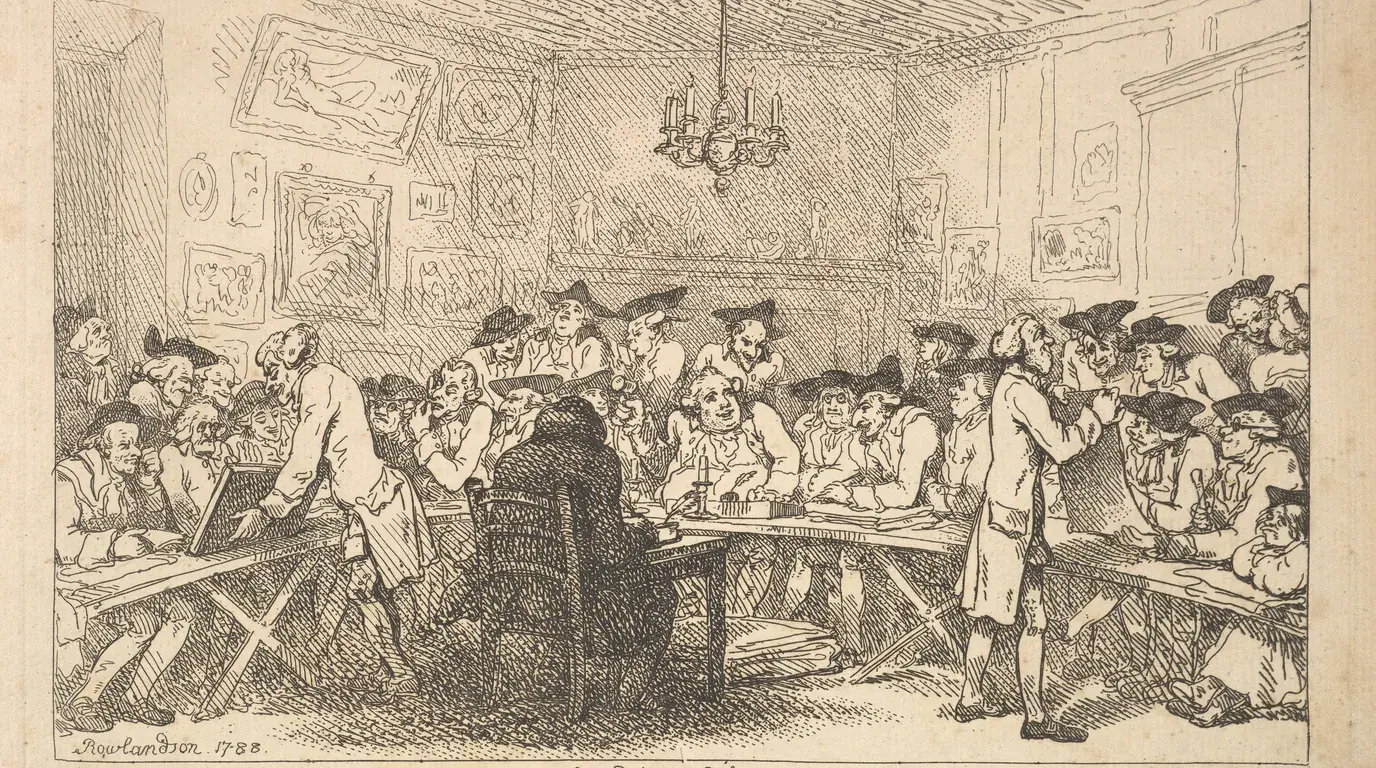
1. In the room. The classic method: you register, receive a numbered paddle, and raise it. The advantage is total control and real-time information — you see who is bidding and how hard. The risk is emotional escalation. The room is engineered for momentum, and the gap between your rehearsed limit and “just one more increment” is where budgets die.
2. Absentee (also called a commission or left bid). You submit a confidential maximum in advance and the house bids on your behalf, using standard increments, only as high as necessary to win — never above your ceiling. If you leave £3,000 on a lot that only needs £2,000 to win, you win at £2,000. Absentee bidding is the disciplined collector’s friend: it removes the room’s adrenaline and forces you to commit to a number in the calm of your own home.
3. Telephone. A house representative calls you shortly before your lot — often around five lots ahead — and relays the live bidding while you instruct them by phone. It suits high-value lots where you want live judgement without attending. Know your ceiling before the call, speak clearly, and decide in advance the exact words that mean “stop.” Hesitation on the line can cost you the lot or push you past your limit.
4. Live online. Most major and regional houses now stream sales through their own platforms or aggregators, letting you bid in real time from anywhere. Register well ahead — approval can take a day or more — test your login, and remember that online platforms sometimes add their own surcharge on top of the house premium. Check the terms before you click.
Bid increments: the invisible staircase
Auctioneers move bidding in fixed steps that scale with price — perhaps £100 steps in the low hundreds, £500 steps in the low thousands, and so on. You cannot bid arbitrary amounts; you bid the next increment. This matters for absentee bids: the software advances your bid one increment at a time against rivals, which is why a well-placed absentee ceiling frequently wins below its maximum. It also means a “round” mental limit may not land on an increment — so decide whether you are willing to go one step above your number, or firmly not.
A disciplined pre-sale routine
The same routine works whether you are buying a drawing, a case of Bordeaux, a wristwatch, or a car.
- Inspect or request the condition report in writing. Never rely on a catalogue photograph alone. For high-value lots, view in person or send a specialist.
- Calculate the all-in cost. Hammer ceiling, plus premium, plus any taxes, plus shipping, insurance, and — for cars or wine — storage or transport. The premium alone can turn a “bargain” into a full-price purchase.
- Confirm provenance and authenticity before, not after. The catalogue’s attribution language is a legal claim, not a courtesy. “By”, “attributed to”, and “circle of” are different products at different prices.
- Set your hammer maximum and write it down. The written number is your defence against the room.
- Register early and choose your bidding method deliberately.
For category-specific mechanics, our tutorials on buying fine wine at auction and the classic car auction guide cover the premiums, logistics, and inspection quirks unique to those markets, and first-time art buyers should read how to buy your first artwork alongside this. What the full bill looks like beyond the hammer price is broken down in auction fees: what you actually pay, and what catalogue condition words do and do not promise is in condition grading explained.
Where auction bidding fits a collection
Auction is the secondary market — transparent price history, but caveat emptor on condition and, for older works, provenance. For contemporary work where you want documented provenance from the point of purchase rather than a reconstructed chain, buying primary-market from the representing gallery is often cleaner: the chain starts with your invoice and sidesteps some of the diligence burden that secondary lots carry. Galleries now make about a third of their sales at fairs, and how to compare a fair price with the all-in cost of the same work at auction is set out in the art fairs guide. Neither route guarantees a return — art, wine, watches, and cars are illiquid assets whose values can fall as well as rise, and the buyer’s premium is a real, unrecoverable cost the moment the gavel falls. Buy what you can justify owning even if it never appreciates.
For the wider view on how auction acquisitions sit within a coherent collection, our sister title Aureum & Co keeps a running perspective at aureumandco.com, and collectors focused on watches and jewellery will find complementary market notes at nordicgilt.com.
The bottom line
The auction room rewards preparation and punishes improvisation. Learn the catalogue, fix your all-in maximum with the buyer’s premium built in, choose the bidding method that keeps you calm, and treat the reserve and estimate as the house’s information rather than your instruction. Do that, and bidding becomes the most transparent way to buy — a public, documented transaction where every number is on the page before you raise your hand.
Frequently asked questions
How do you bid at an art auction?
You can bid using four main methods: in the room with a numbered paddle, as an absentee by leaving a confidential maximum in advance, over the telephone with a house representative, or live online through a platform. Always register early and calculate the all-in cost before placing any bids.
Can you bid at an auction without attending?
Yes. Absentee bids, telephone bidding and live online bidding all let you take part remotely. Register well ahead — online approval can take a day or more — and check whether the online platform adds its own surcharge on top of the house premium.
How do absentee or commission bids work?
You submit a confidential maximum in advance of the sale. The auction house bids on your behalf using standard increments, only going as high as necessary to win against rivals and never above your ceiling. This method removes room adrenaline and lets you commit calmly.
What is the hammer price versus the buyer’s premium?
The hammer price is the winning bid accepted by the auctioneer when the gavel falls. The buyer’s premium is a non-optional percentage added on top of the hammer price, typically running from roughly 10% to 25%, which is paid directly by the winning bidder to the auction house.
What is the difference between a reserve and an estimate?
The estimate is the published opinion of value given as a range to help attract bidding. The reserve is a confidential minimum price set by the seller at or below the low estimate, and a lot will not sell below this undisclosed figure if bidding stalls.
Sources
Wikipedia, “Buyer’s premium” — definition, history since its 1975 introduction, and typical 10–25% range.
Sotheby’s, “How to Buy” — official guidance on absentee, telephone, and online bidding and registration.
Christie’s, Help & FAQs — bidding methods, reserves, estimates, and buyer’s premium explanation.
Invaluable, “How to Bid at Auction” — first-timer guide to bid increments, absentee execution, and live online bidding.